Thanks! I think so: when I connect to share power, there is a loud “click” sound so I assume that is the switch you are referring to (sorry I am not an expert on the topic ).
Trying to get a wiring diagram from the previous owner. The Bluetooth dongle you mentioned, is required for the diagnostics or already part of the potential solution? Thanks
With the Bluetooth dongle, you can program the inverter, display performance data, or update the firmware, like your smart solar charger, there this function is already built into.
I also checked, the previous owner has a wiring diagram, but he can only send it mid October as he is travelling.
But again: earlier the fridge worked offgrid (as far as I recall), so something happened recently. I think there is a similar symptom with the Vevor diesel heater: it only starts ongrid, or when the battery is 100% charged.
I have checked the wires, haven’t found loose connections.
There is no dedicated fuse for the fridge, and as I see the others are also OK. Unfortunately I don’t have a multimeter (and the knowledge what to measure and where ).
I think the battery is not an issue, it is 1 year old. When it’s fully charged by the charger on grid, the fridge starts but then stops (see my test yesterday).
As your inverter is showing low voltage you either have a voltage drop issue or as others have said your shutdown voltage is wrong. Without doing the tests you can not tell if there is an issue or not.
Does Your battery has some kind of diagnostics (Bluetooth app)?
It would be great to see the voltage of cells as one of the reasons could be cell disbalance in the battery. The total voltage of battery as far as I guess from the screenshots is about 14.4 V when going to float, so it looks fine, but there could some cell inside which are undercharged or overcharged, the difference developing during the Year leading to short runtime at serious load (= the fridge).
Thanks Guys for thinking along! I will check the battery app later today.
In the meantime I found an article, according to this, the Dynamic cut off is disabled by default. Do I still need to purchase a Bluetooth dongle for the inverter?
Thanks Dirk. I will only receive the diagram mid October as the guy is travelling.
I will try to find a multimeter somewhere and do the measurements
The following devices are operating from the household battery: the fridge, a diesel heater, waterpump and interior led lighting. (When I am on grid, there is a water boiler but that is not supposed to work offgrid).
From the above, everything works fine offgrid, except for the fridge and the diesel heater. I assume these require huge voltage when turning on…
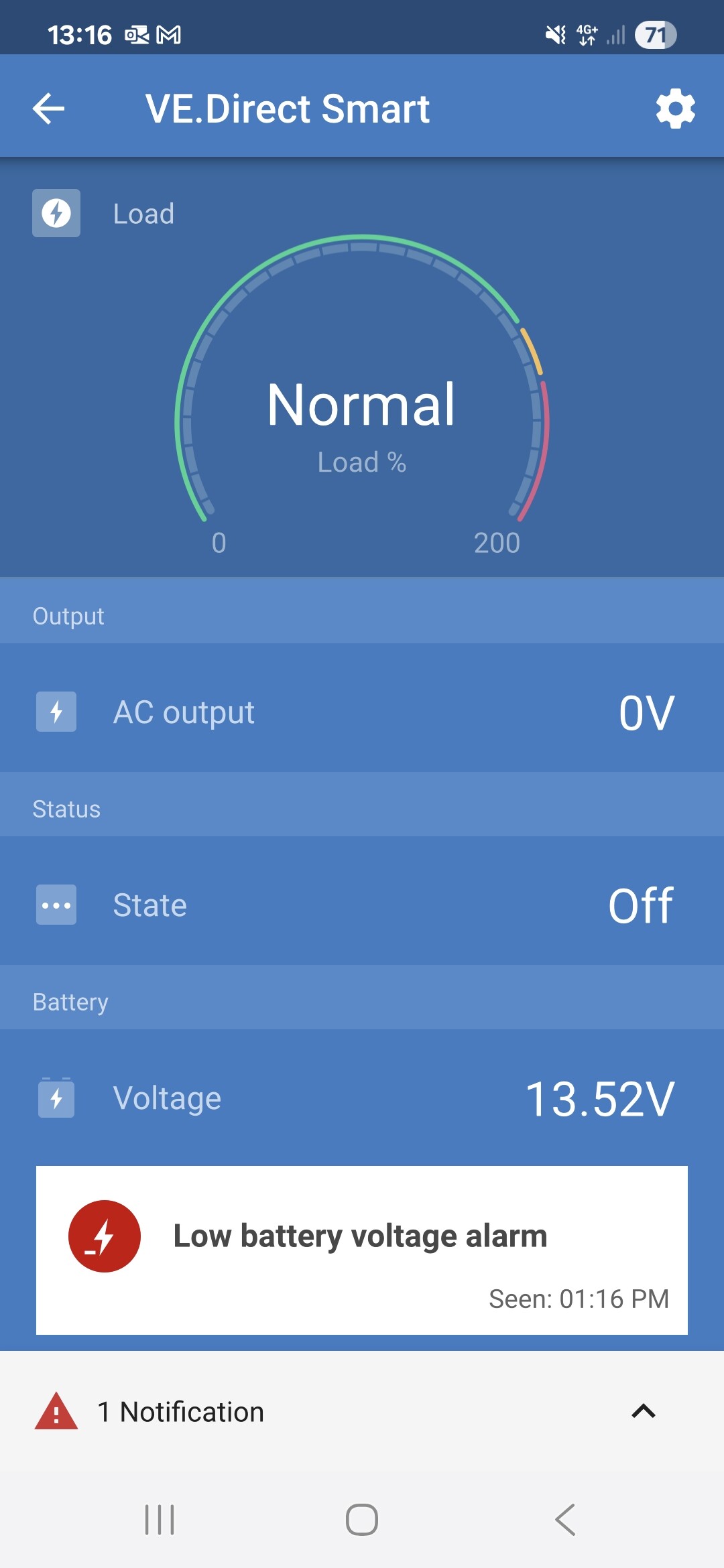
Today I tested the system with the diesel heater, it started nicely (offgrid), however sometimes I also had problems with it. Please see the diagram from Victron app.
This week I will get a bluetooth dongle, will let you know what I see in the app…
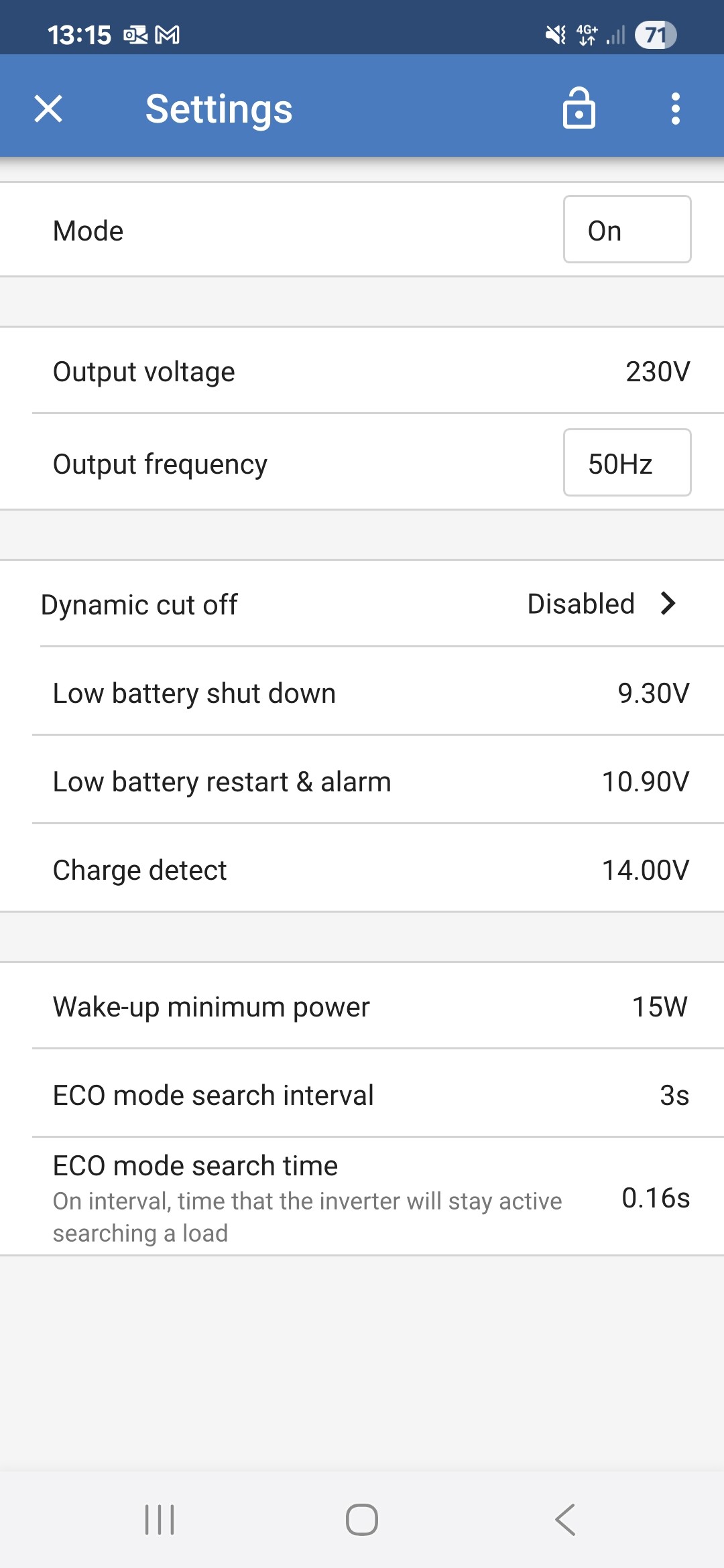
I have received and installed the Bluetooth dongle. The dynamic cut off is disabled, but the low voltage limit is on 10.9 V and as I see on the diagram, the fridge approached this when tried to turn on.
Shall I just lower the limit? Wanted to check with you, to avoid messing up the system
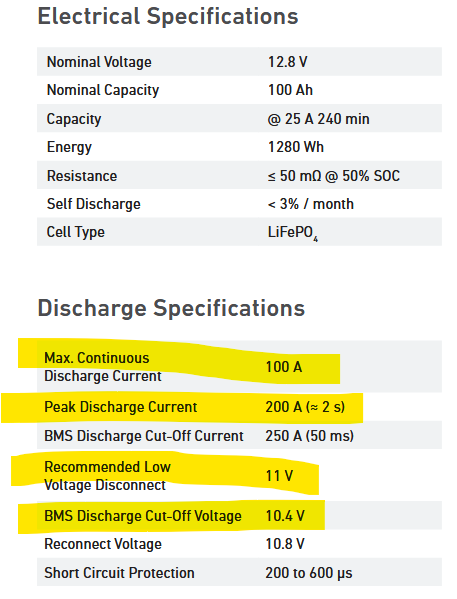
So if the inverter switches off due to undervoltage (9.3V) in these settings, then I would assume that there is a significant voltage drop on the wire . Lithium batteries can normally supply a very high current without breaking down. I’ve copied some data from a data sheet for a comparable battery. There you can see the recommendations for the undervoltage shutdown of this battery at 11V; the BMS shuts down at 10.4V. With these settings (without line losses), the battery BMS switches off before the inverter. Something’s wrong here!
Please measure the voltage when switching on the refrigerator at the connection terminals of the inverter and directly at the battery in a second step.
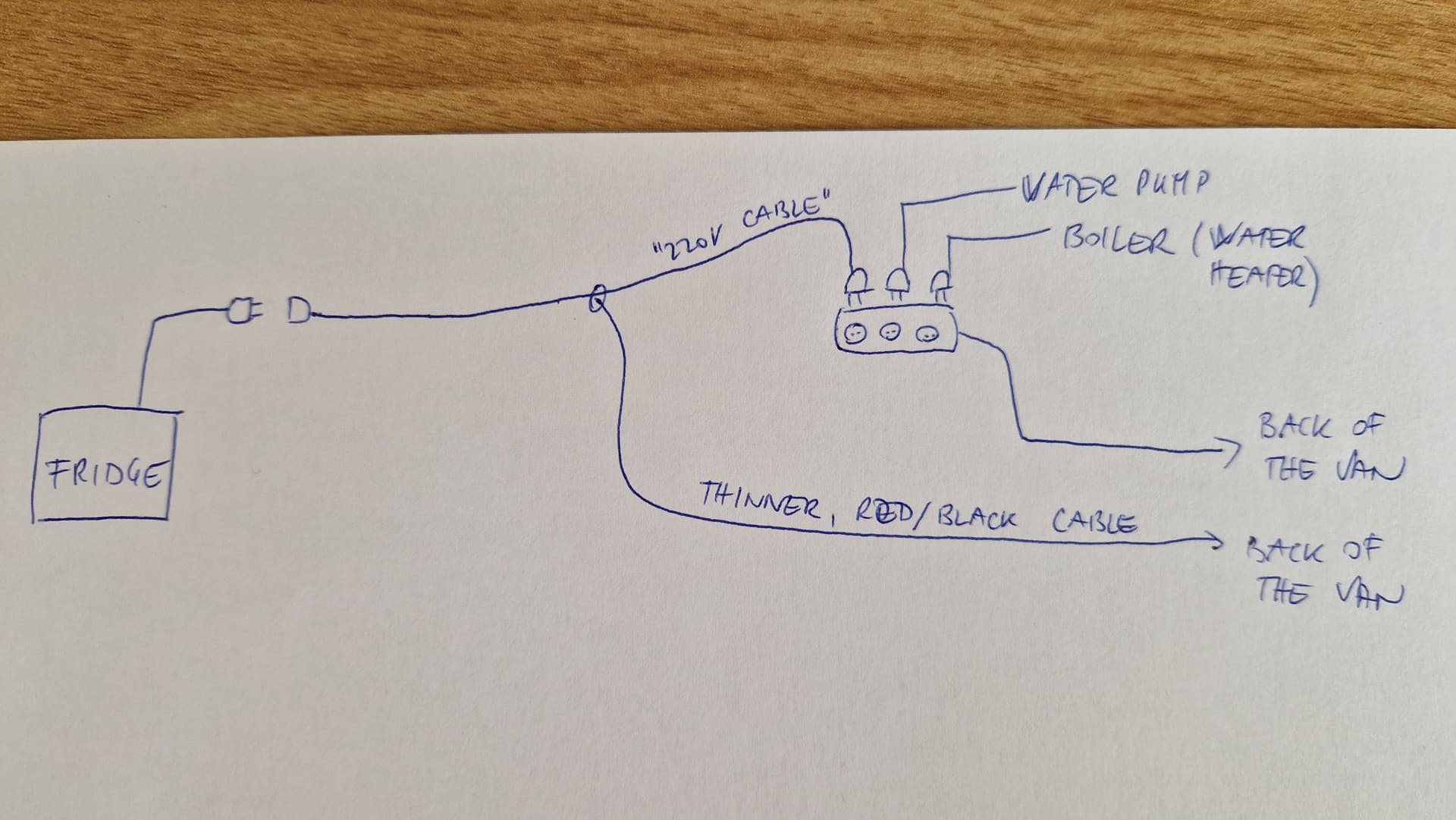
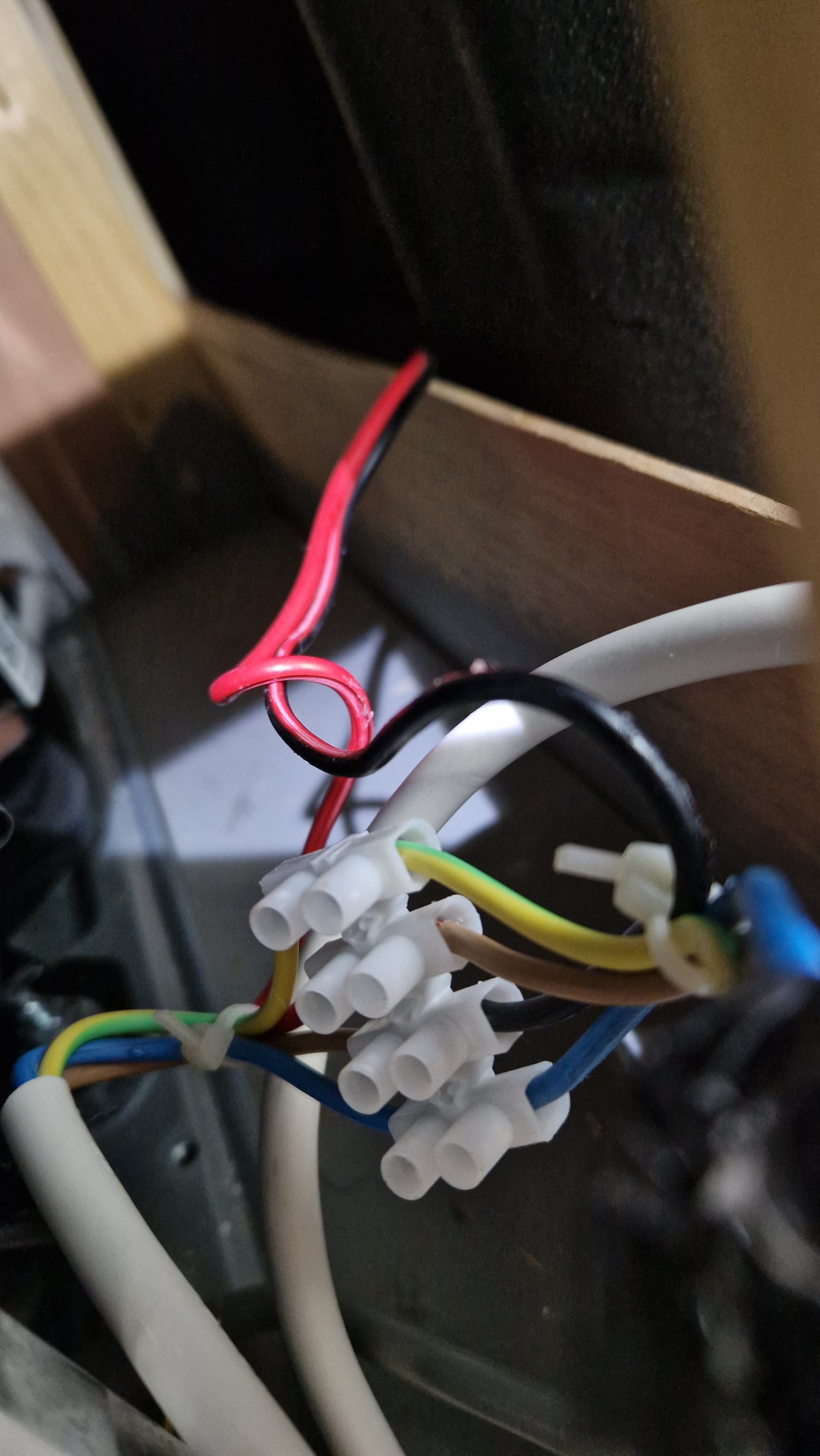
Hello, I managed to get behind the fridge and see how the connections are done (until I will get the proper wiring diagram).
Please see attached drawing, plus the photo of the conjunction of the “220V cable” and the thinner, red and black cable (there was a duct tape around that I removed, to check if there is a loose connection).
I also managed to get a multimeter: besides the battery and inverter as Dirk proposed, should I measure anywhere behind the fridge?
Your problem is nothing to do with the 220V ac cabling, it is on the 12V battery to inverter and battery to DC bus. When you have shorepower your fridge runs directly from shorepower and whatever charged your battery keep the battery voltage higher and supplies extra DC power so the diesel heater starts easier.
 ).
).