Battery: 15-cell (15S) LiFePO4 (48V nominal) used more as a capacitor.
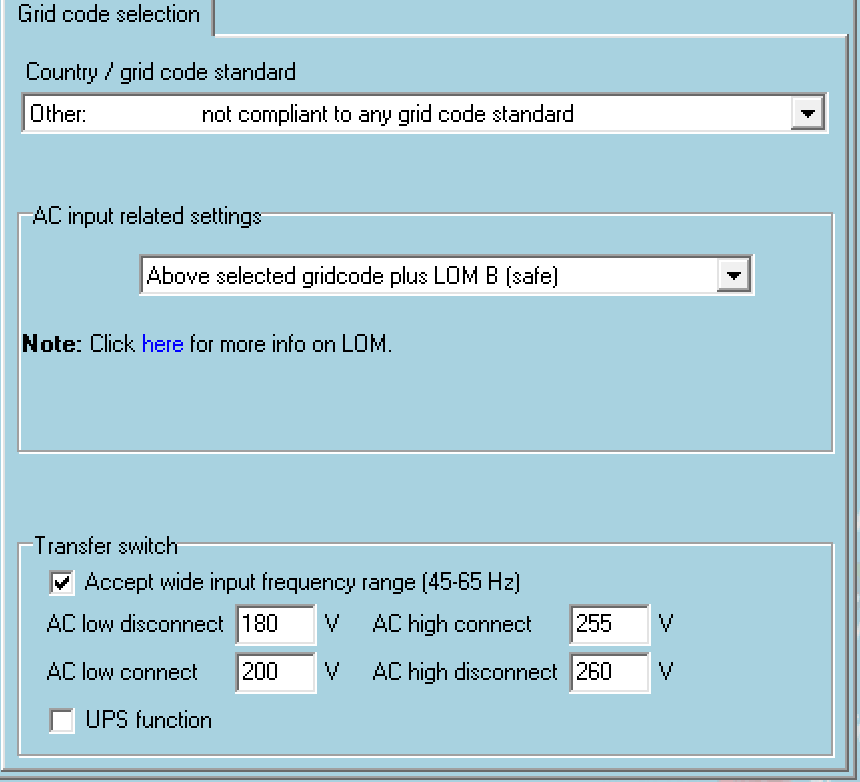
Grid Profile: Australia B (AS/NZS 4777.2:2020)
PV: Max 1800W (9*250W panels)
Load: < 10A (Avg 400W, max 2500W)
System Objectives
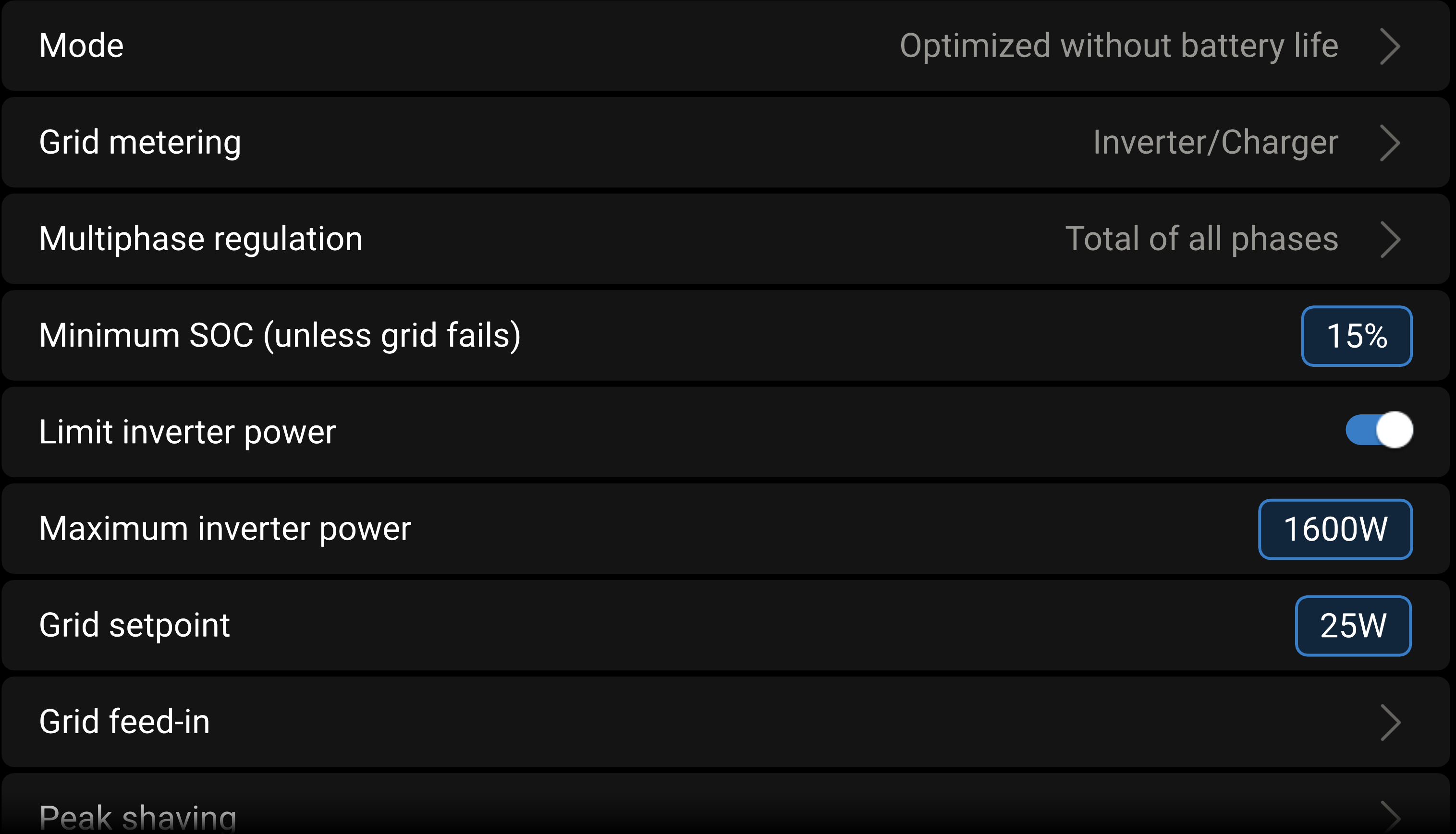
Maximize Self-Consumption: Prioritize all available DC-coupled solar power for loads and battery charging. Utilize battery storage down to a 15% Minimum State of Charge (SoC) before drawing power from the utility grid.
DC Discharge Current Limiting: Restrict the battery discharge current to a maximum of 40A. Any load demand exceeding this threshold should be supplemented by the grid using logic.
Solar-Exclusive Charging: Restrict battery charging strictly to the SmartSolar MPPT, maximizing all available PV power to ensure the battery reaches 100% SoC daily.
Technical Issues and Observations
PV Throttling at High SoC: Under ESS “Optimized” mode, the system aggressively throttles the MPPT charge current as the battery exceeds 90% SoC (e.g., dropping from 250W to 5W). This behavior prevents the battery from reaching a 100% state of charge by the end of the day, despite sufficient solar irradiance and a 50A (1C) charge current limit.
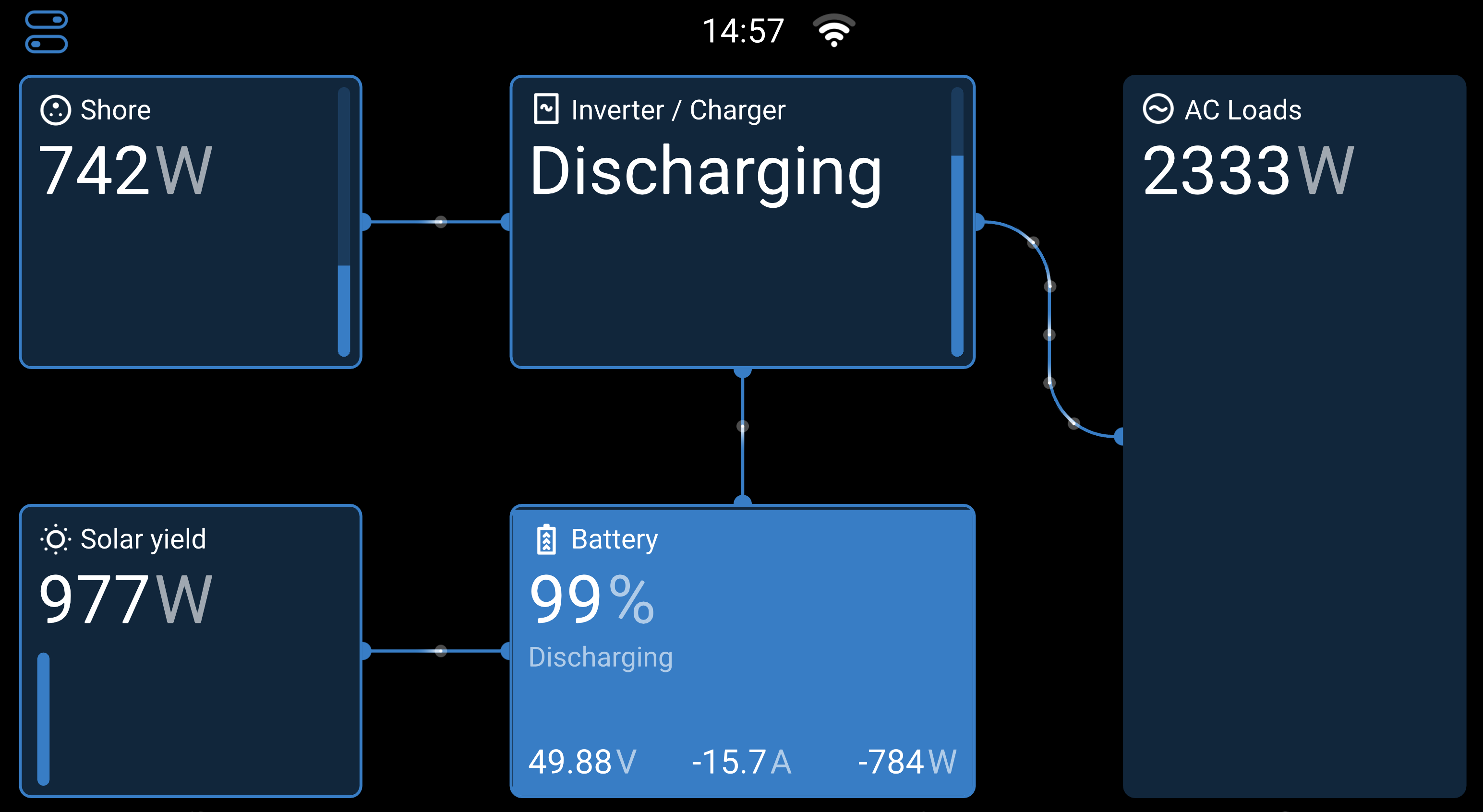
Frequent “Grid Lost” Alarms: The MultiPlus-II frequently disconnects from the mains with “Grid Lost” notifications. Local grid voltage typically ranges from 244V to 255V. While connected, the system often draws power from the grid while simultaneously de-rating the 1800W solar array, failing to utilize available PV potential.
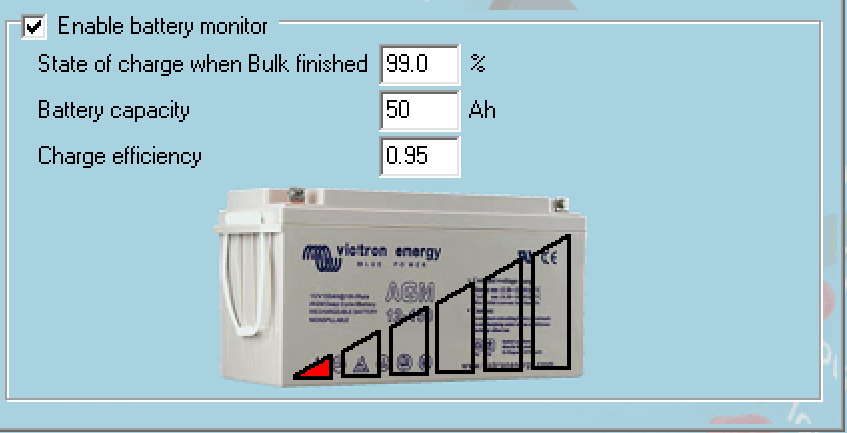
Charger Configuration Verification: To achieve solar-only charging, I have manually disabled the “Charger” in VEConfigure. I need to confirm if this is the recommended procedure for an ESS installation or if this hard-disable conflicts with the ESS Assistant’s internal logic, contributing to the de-rating of the MPPT.
Alarm Transparency: The system does not provide specific reason codes for the frequent grid disconnections. More granular alarm data (e.g., voltage/frequency trip points) would be highly beneficial for local AC and DC troubleshooting.
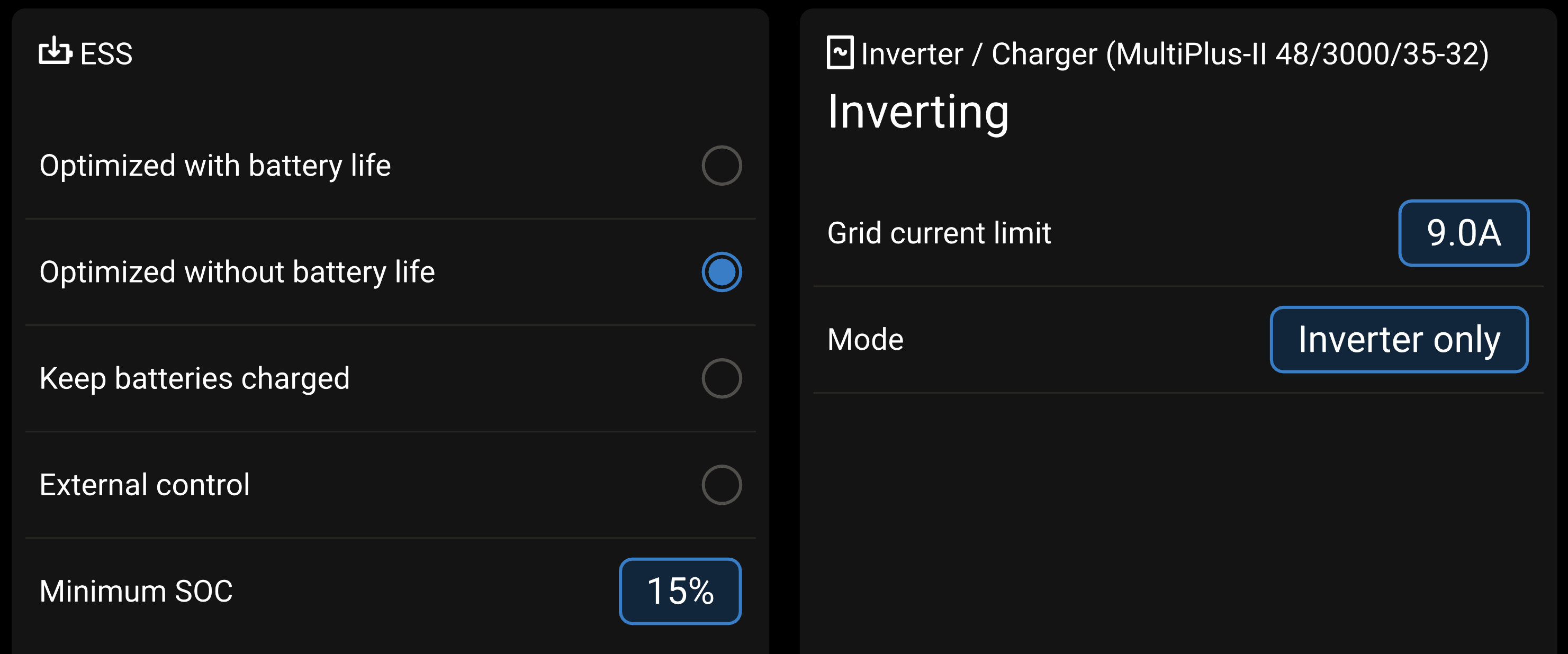
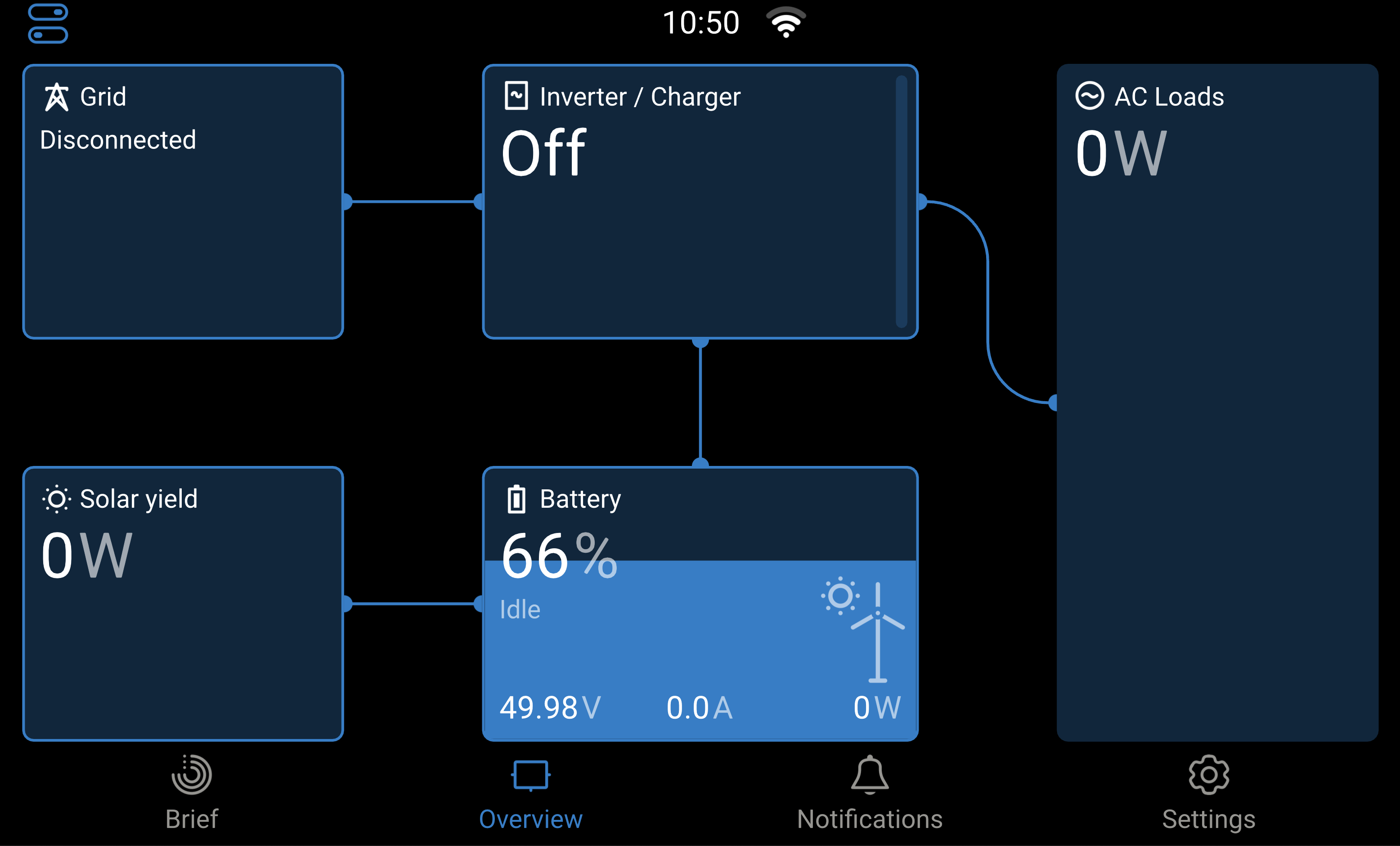
It’s in “Inverter Only” mode because the “On” mode triggers the “Lost Grid” alarm.
I restricted the Max inverter power to 1600W to fall within the 1800W PV and also because at 48A the battery’s BMS would cut power which was another strange issue I had, so now the max it should draw is 35A from the battery. Usual load is <1kW
Does your battery communicate with the GX device?
It’s normal that the charging current gets reduced if the battery is almost full.
What are the charge settings in the MultiPlus/MPPT?
If you have voltages of up to 255V than it’s normal that the MultiPlus disconnects the grid.
You can leave the MultiPlus charger on, with ESS the system is only charging from the grid to protect the battery and that is also done if you disable the charger.
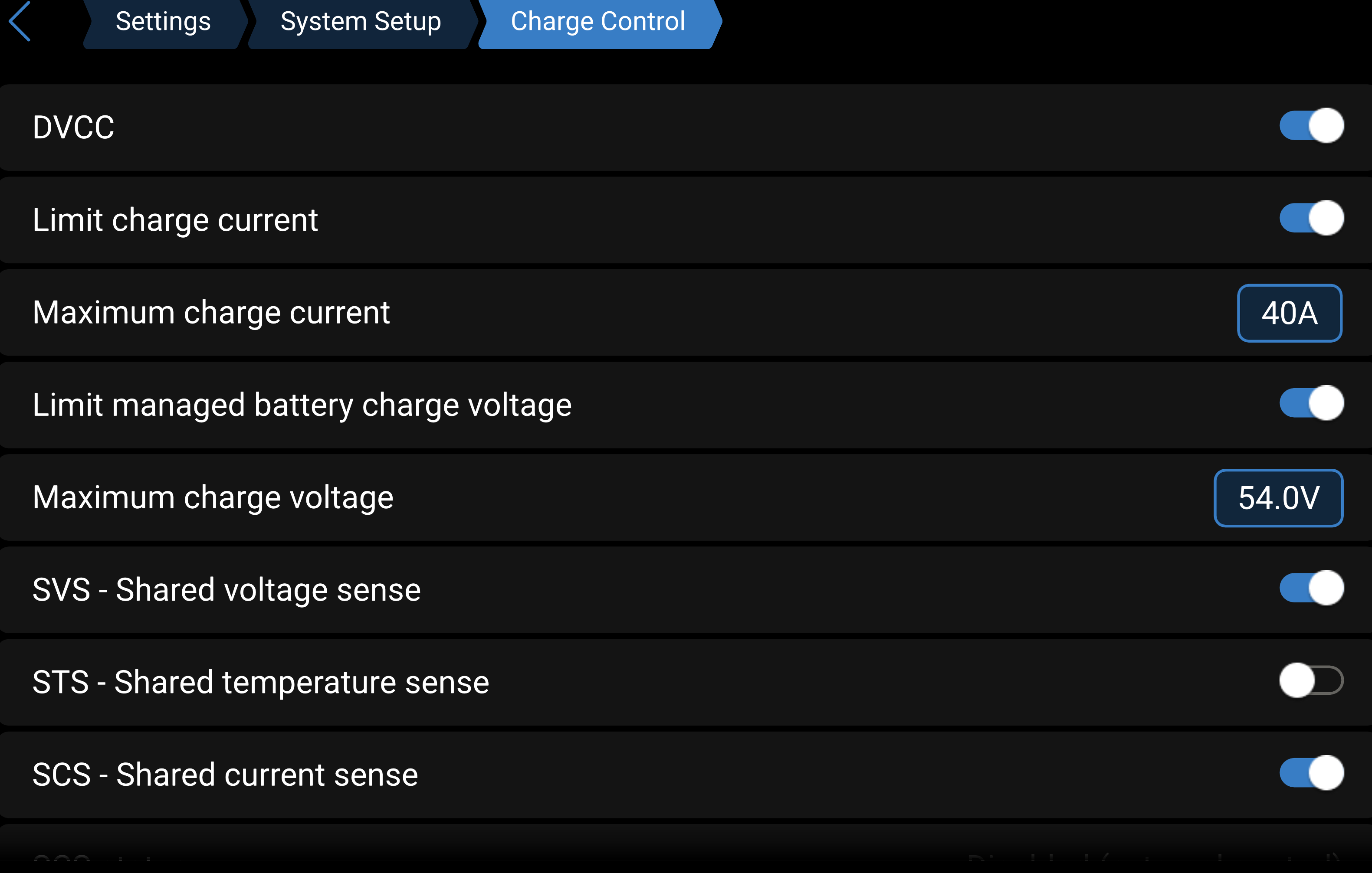
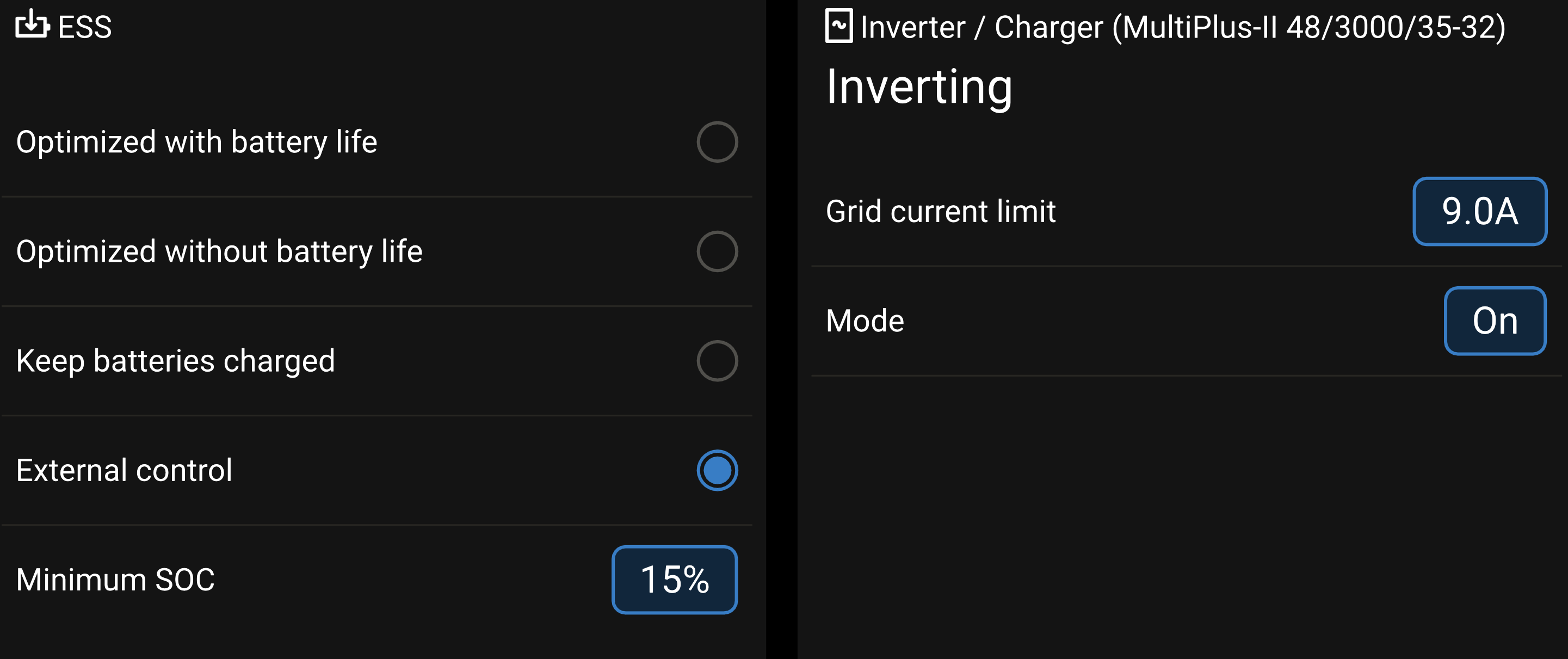
From the state of your Inverter (Inverting) I conclude you don’t have DVCC enabled. In that case, the reported charge current limit of the battery is of no use and the inverter will act according to its charge-profile. That is only required for unmanaged batteries. If there is a supported BMS, it should be in control.
Therefore, you have to set DVCC to on and make sure “Controlling BMS” is set to your actual BMS. THEN the Inverter would state External Control and use the BMS requested limits. At the same time, whatever charge-behaviour you configure in VE Configure will no longer apply but just be a backup, if BMS connection is lost.
DVCC (Distributed Voltage and Current Control) then will take care to provide a suitable voltage offset to the MPPTs to ensure they work on a high enough delta compared to batteries ACTUAL voltage even at high Socs.
That was my thought too, but I don’t know why I get “Lost Grid”, just that I do and the measured voltage is 245-255V. Note I have another inverter supplying grid power, so it might be officially <253V, but locally not. The Multiplus doesn’t supply the grid
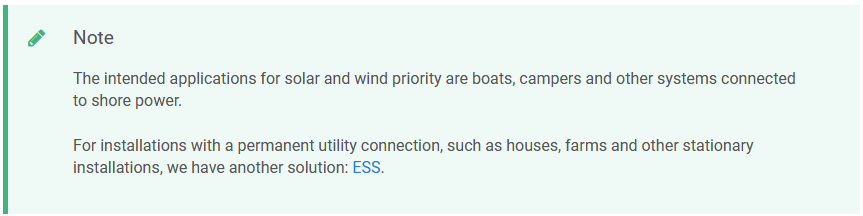
Not sure how it’s protecting the battery, it’s using the grid to charge the battery when I have abundant PV. And I’m not sure how to set wind and solar priority.
All I want it to do is use all available solar (I can care for the battery), then supplement batt/PV power with grid when load is > 1.6kW.
And today would not even turn on…. I had to power cycle the whole thing to get it to start up. You could change to On/Inverter Mode, but inverter stayed off.