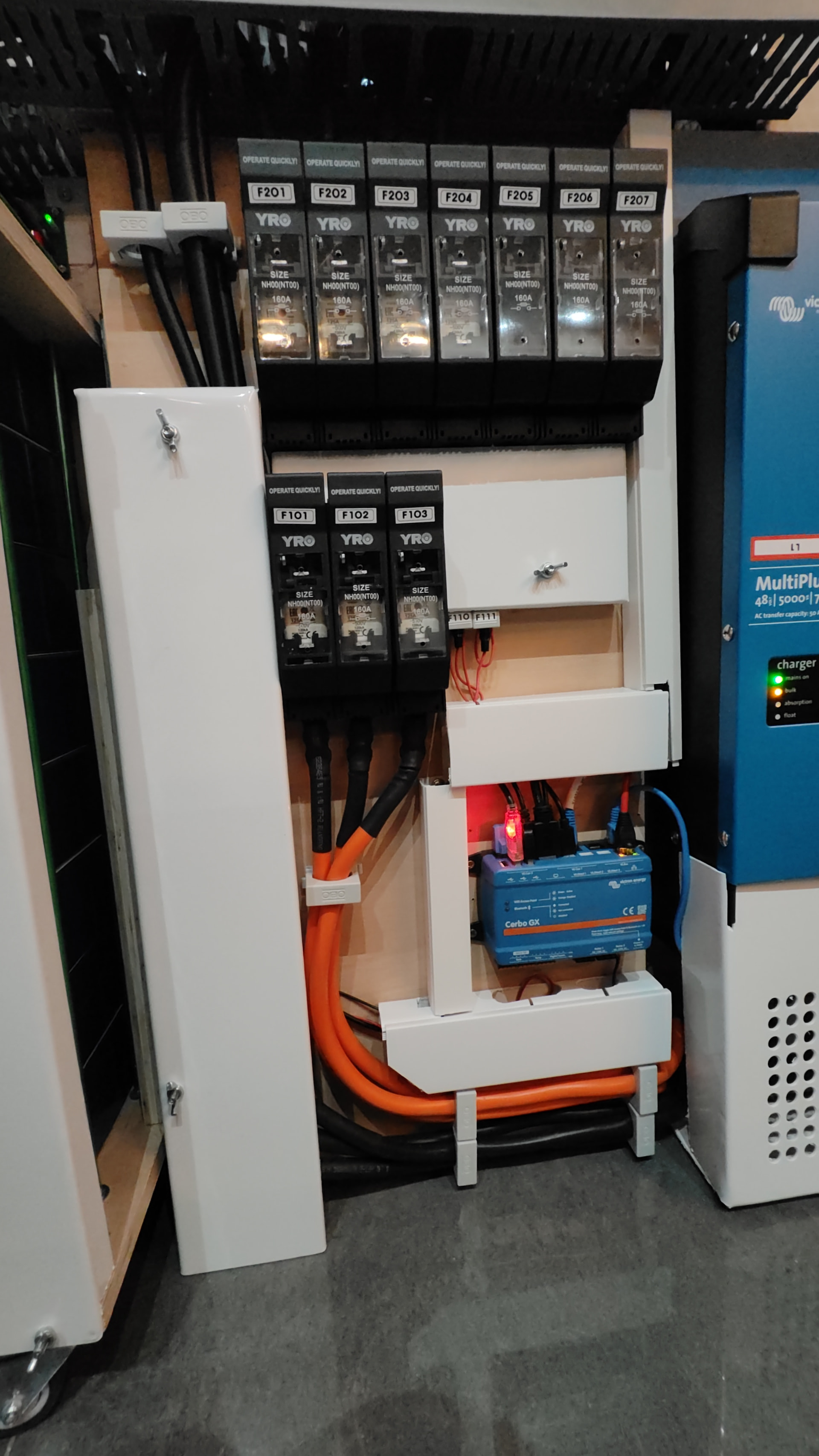
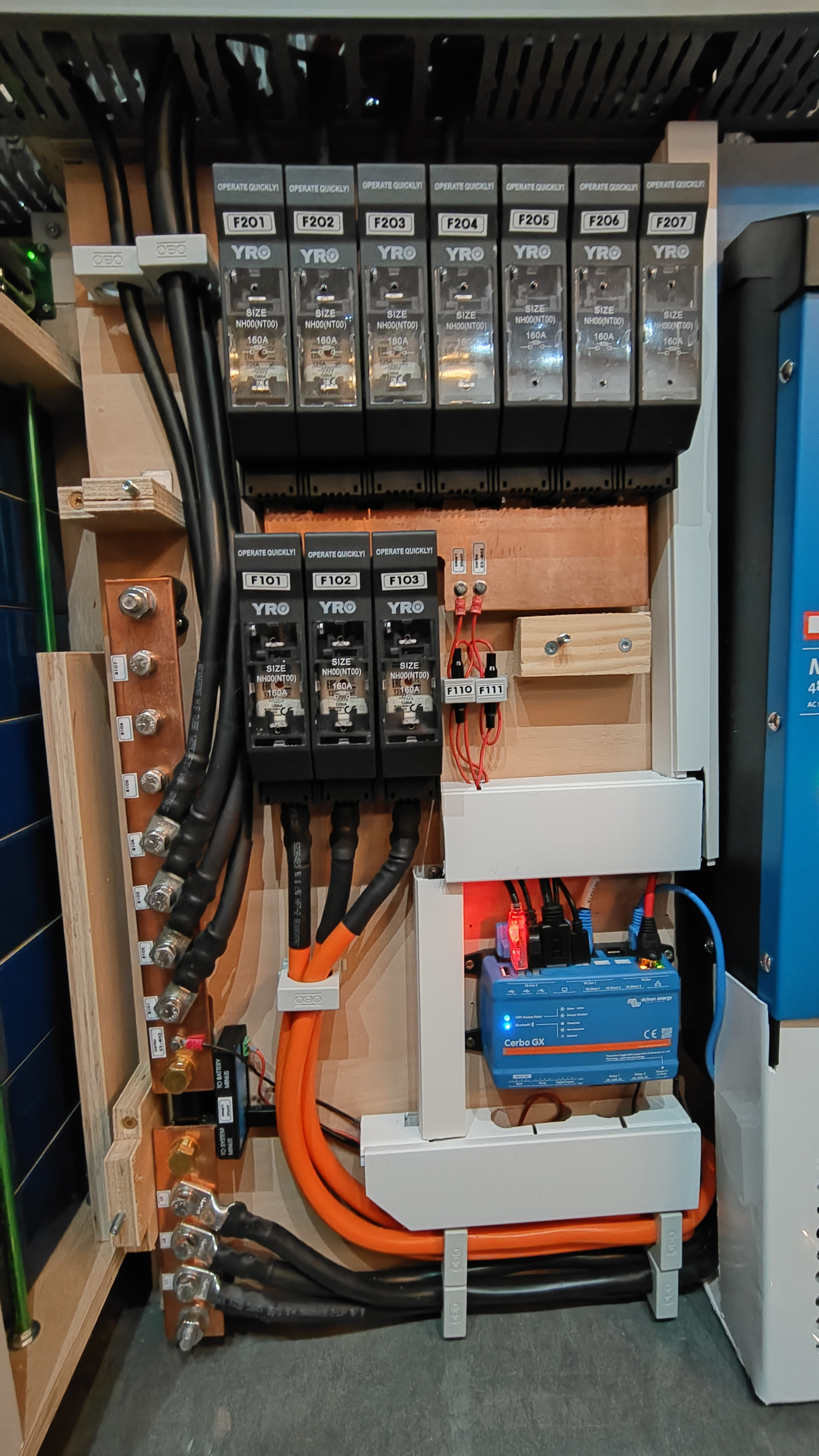
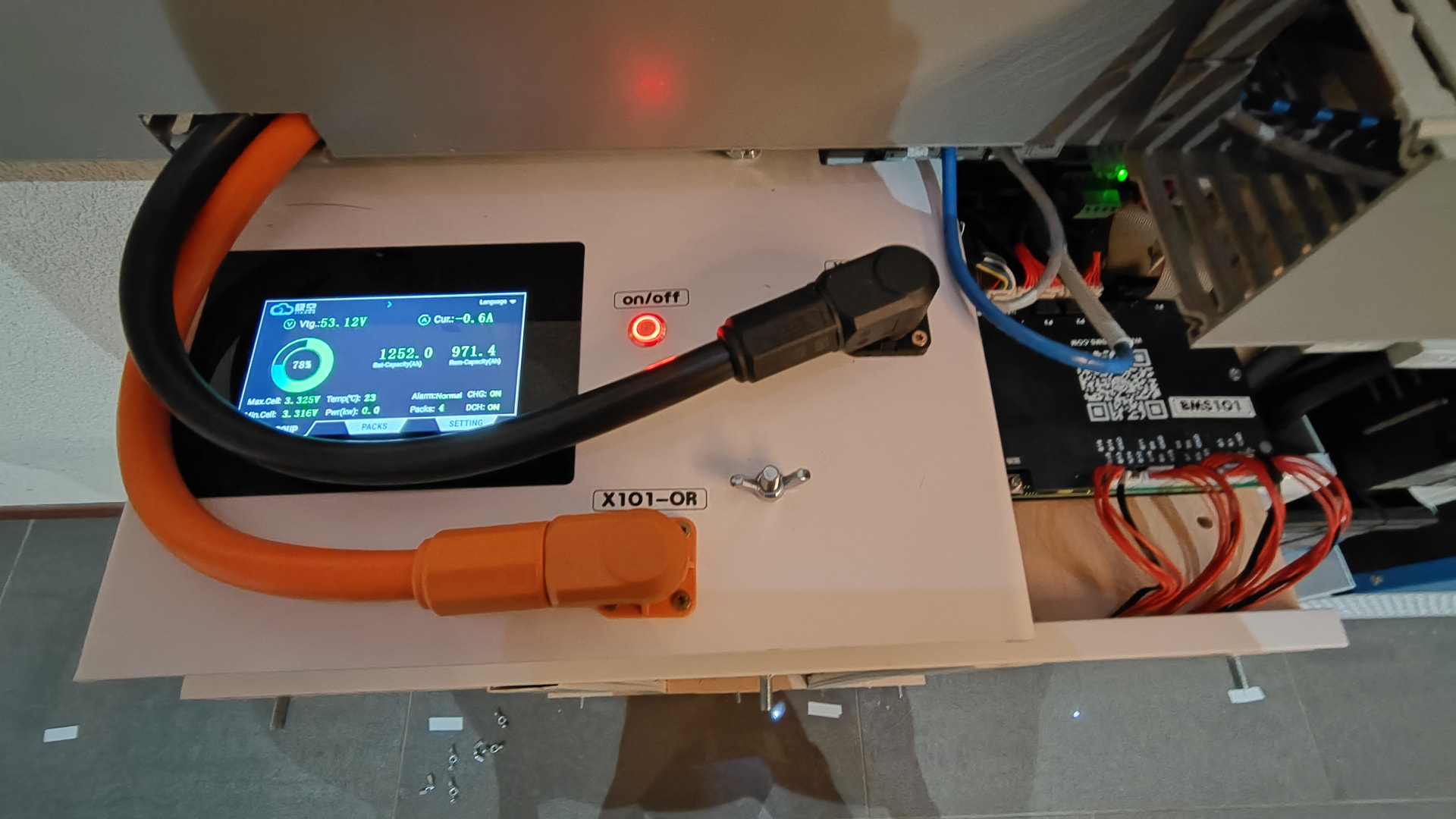
Really cool setup. Not sure if you know, but there are NH00 fuse links with a gBAT characteristic specifically designed for battery protection. ETI is one of the companies that makes them. Here in Poland such a fuse costs around 70 PLN, which comes out to roughly 16.50 euros. Standard gG fuses might work, but they’re not guaranteed to trip correctly — especially with the very high short-circuit currents these battery packs can generate.
Hi Peter. So with four PV systems and a battery system, you have multiple feed ins. I can’t seem to locate these in your utility room. Are you also going to add the required NEN1010 labels?
Peter, all the fuss about gBAT-rated fuse links isn’t about protecting the wires from overload. It’s purely about making sure the fuse is actually able to interrupt a short-circuit current. With a battery pack like the one you have, the prospective short-circuit current can reach several tens of kA. In a normal setup, a standard fuse would simply explode and damage the surrounding equipment. The gBAT type is designed to withstand and safely interrupt short-circuit currents of up to 50 kA without any mechanical destruction of the fuse itself.
The fuse is rated for 250 Vdc and a short-circuit protection of 120 kA, the internal resistance of a battery cell is 0,2 mOhm, at a voltage of max 3,65V, gives a max current of 18,25 kA. Should be enough.
Which fuse are you talking about? 250 V DC and 120 kA looks very good on paper. The problem is that standard NH00 gG fuse links don’t have that kind of breaking capacity. The 120 kA rating applies to AC current, where the arc naturally extinguishes itself when the current sine wave crosses zero.
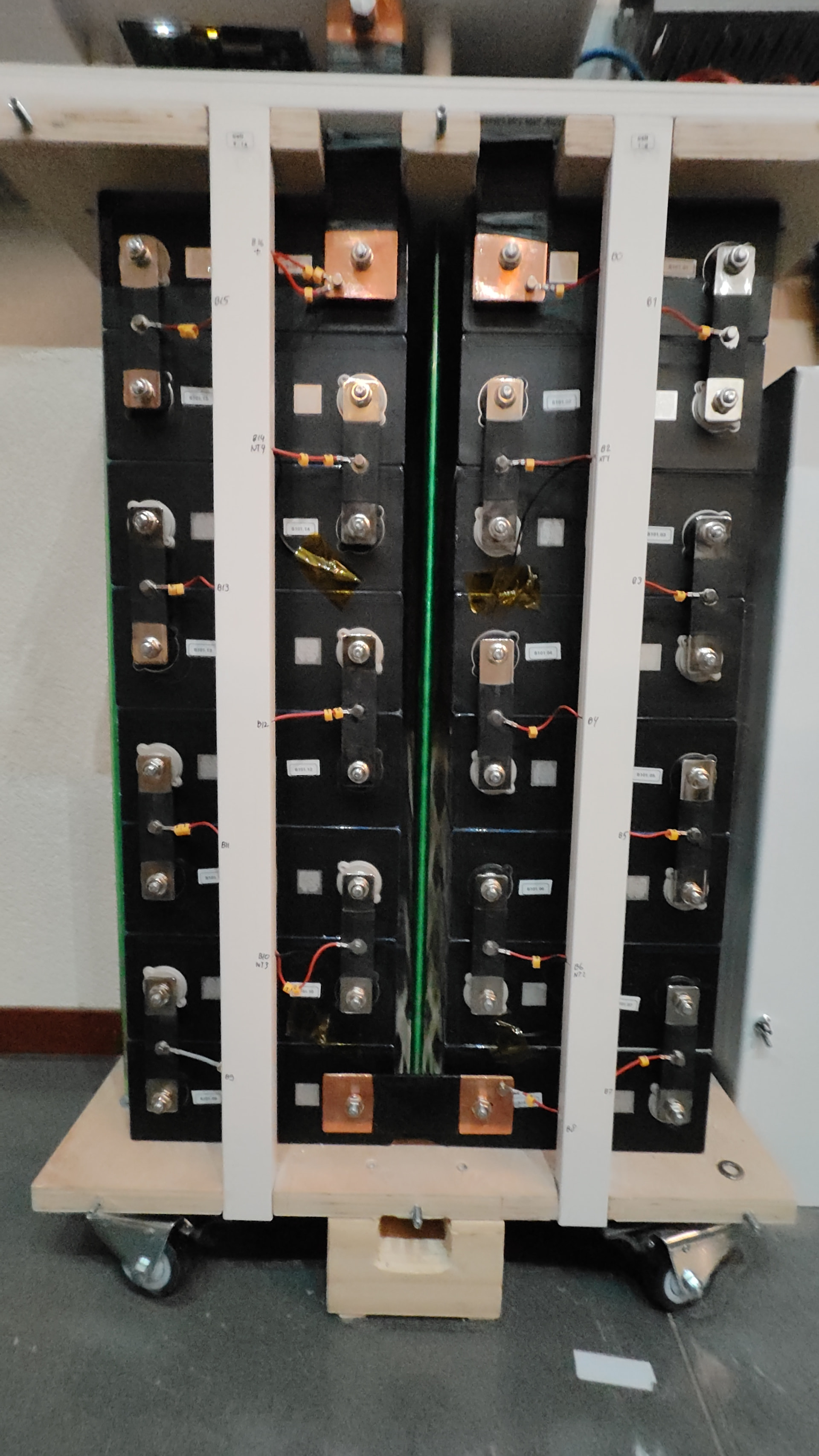
There’s quite a difference between 120 kA and 25 kA, right? If you’ve got a single battery pack, that should be enough. But if you have more than one, it might not be sufficient.
Yes, I understand that, but the question is what happens next. Each battery is connected to a common busbar, and all the loads are fed from that busbar. On this busbar you have the full prospective short-circuit power of the entire battery system. Let’s assume a short circuit occurs downstream of that busbar. The individual protections of the energy storage units will trip, sure. But what about the protection of the device that actually caused the short circuit?
It is IMHO always better to use gBat fuses. In fact. Each and every home battery with a capacity of 20 kWh and up should need a mandatory safety inspection in 2027 - and a certificate so it seems - or your so called: “Opstal verzekering” may not pay a dime. In other words. A smart thing to do is to contact your insurance company and ask them what exactly they require you to do/have. I mean. Better safe than sorry, right?