Hi everyone. I am facing a weird behavior on a DESS three-phase system. Basically, it charges and discharges in the same hour, making it not very cost efficient.
You can in the image attached that for example at 02:00 it both charged and discharged it.
The system is configured with optimized without battery life and minimum SoC 10% (It was slightly more than 10% at that hour). Total of 20kWh installed.
Any possible explanation?
Thanks!
If it gets too close to the low limit SOC, it starts using the grid, and sometimes charging the battery.
The current minimum SOC is used for two things now, to prevent draining the battery lower than it, and to use as minimum SOC for DESS.
Victron needs to make a separate SOC for DESS to prevent this from happening.
I saw this in the beta version on the Cerbo firmware:
Venus OS
v3.60~47
Dynamic ESS
Improve how Dynamic ESS reacts when actual consumption or solar production differs from forecasted. For example when there is more solar then expected, the updated algorithm will in many cases use that extra solar power to charge the battery, even if that would exceed the planned SOC level for the current hour. Instead of feeding that excess solar back into the grid for a low price, to later have to buy it back at a higher price.
Would this be a solution?
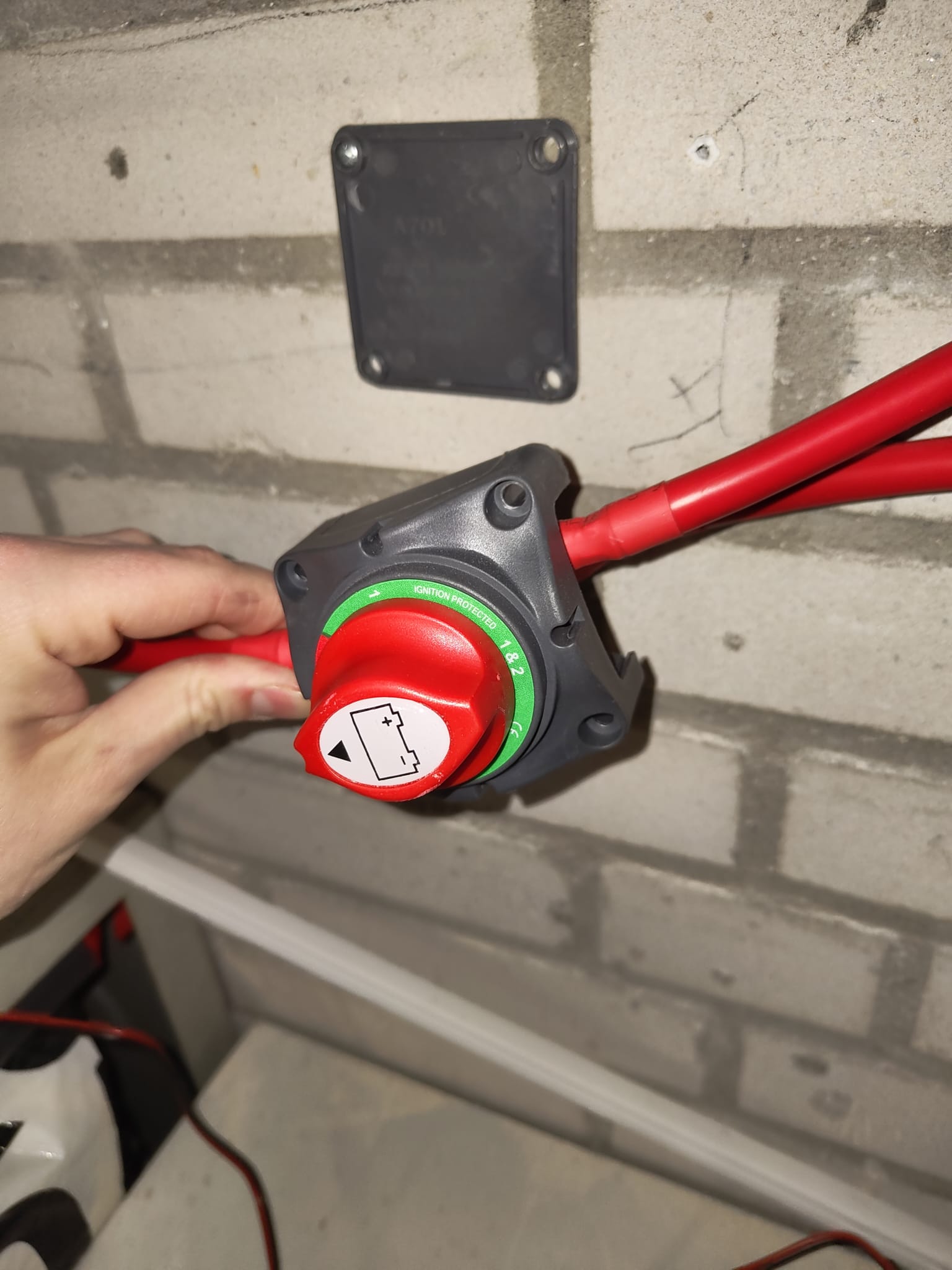
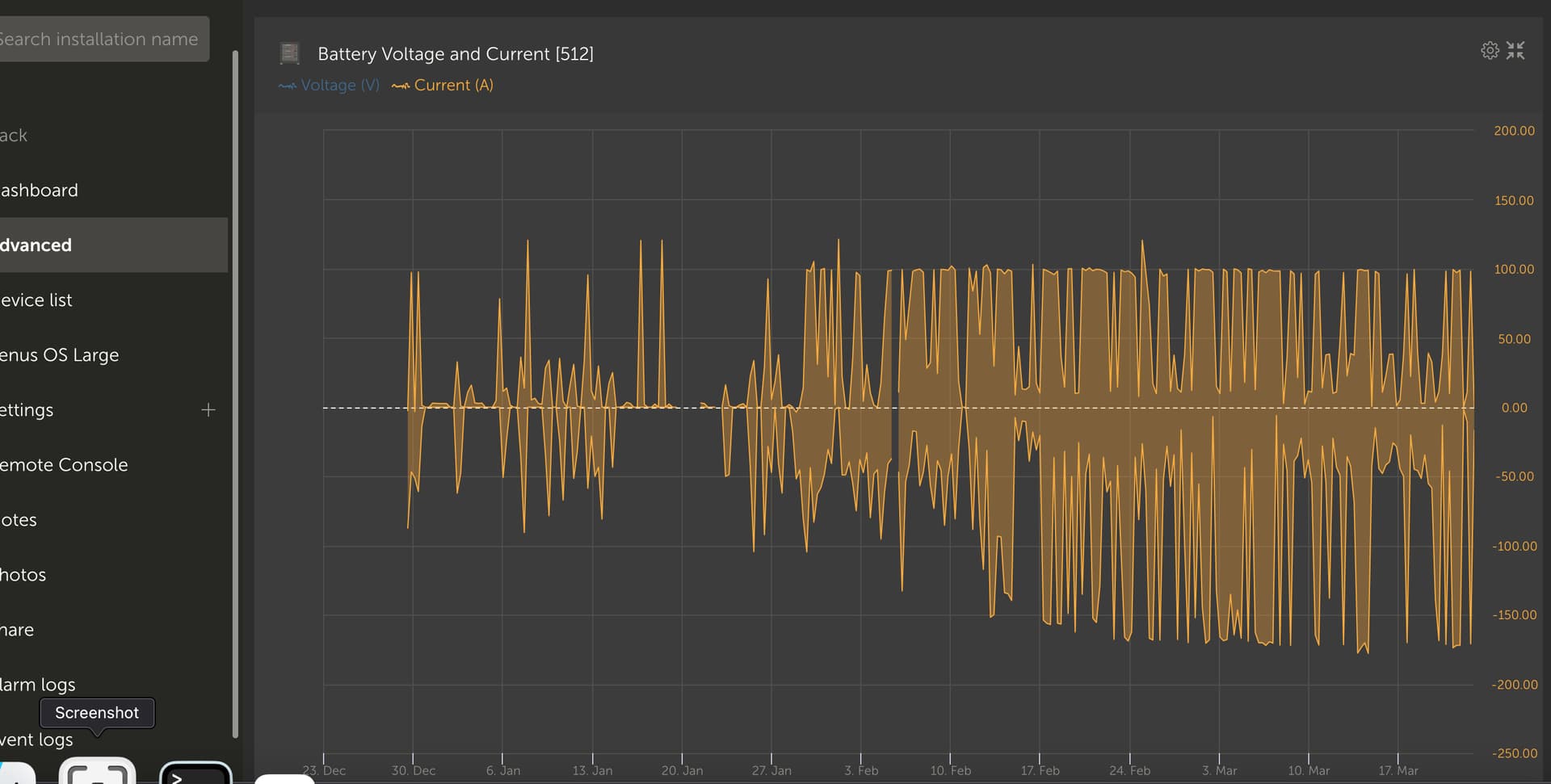
Hi, and thank you for the replies! Actually I found the issue: the battery switch connecting battery #1 and #2 was supposedly capable to handle 200A continuously, but it failed for one battery connection even if the maximum discharge current peak was ~ 170A and in average was about 100 (see pics attached). It was bought from a Dutch manufacturer and I am requesting a refund.
I ended up discovering that via MQTT that the BMS was asking for a “ChargeRequest” triggering the “ForceCharge” in the hub4 overrides when reaching ~ 50%. Thus, I investigated the battery packs serial and power connections, leading to the discovery.