Hi all,
I’m keen to get feedback from other folks who’ve worked with higher-power Victron inverter/chargers.
I’m setting up a Victron MultiPlus-II 48/10000/140 (10 kVA) in an off-grid build with 3x Pylontech US5000B batteries, and I acknowledge Victron’s datasheet calls for a 400 A DC fuse between the inverter and battery. However the manual references a fuse which of course don’t have thermal surge-delays unlike circuit breakers, hence the fuse should be sized for Inverter surge events. Personally I’d prefer to use a DC MCCB so the connection can be safely isolated and reset, rather than replacing fuses during faults, etc.
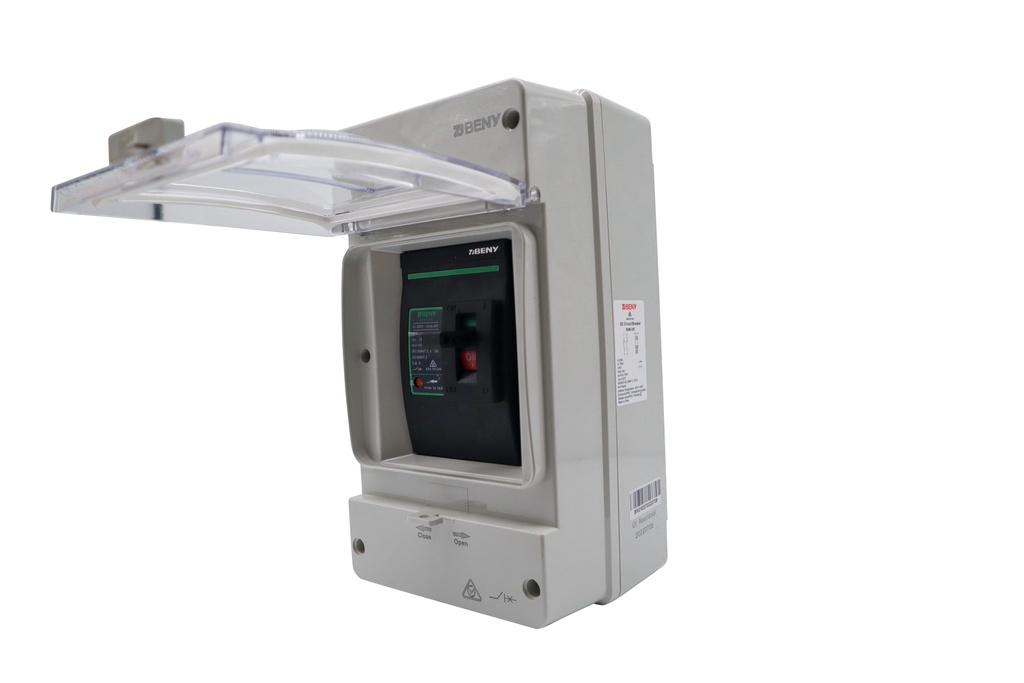
After some research, I’ve been considering the ZJ Beny BDM-250 (250 A DC, 2-pole) as the main battery breaker. I understand Victron’s official documentation calls for a 400 A fuse on the 48/10000 model, but I’d like to sanity-check whether in real-world off-grid builds the 250 A MCCB works safely without tripping on inverter surge thanks to circuit breaker designs being “thermal curve trip” designs, i.e. they don’t trip straight away at 250A but instead need to surge beyond 250A for a time period before tripping. Of course, short circuit events (extremely high surge) are handled by the MCCB’s instantaneous magnetic trip which is fine and equal to a fuse.
What I’ve found so far:
- The MultiPlus II 48/10000 has a maximum continuous DC current of around 235 A, and Victron recommends 2 × 70 mm² conductors per polarity.
- The MultiPlus II 48/10000 can briefly surge to around 400 to 450 A DC during PowerAssist, inverter startup, or motor inrush, typically lasting 1 to 2 seconds.
- The Beny BDM-250 is rated for 250 A continuous at ≤ 500 V DC, with a thermal-magnetic (inverse-time) trip curve that matches IEC 60947-2.
- From the manufacturer’s trip curve:
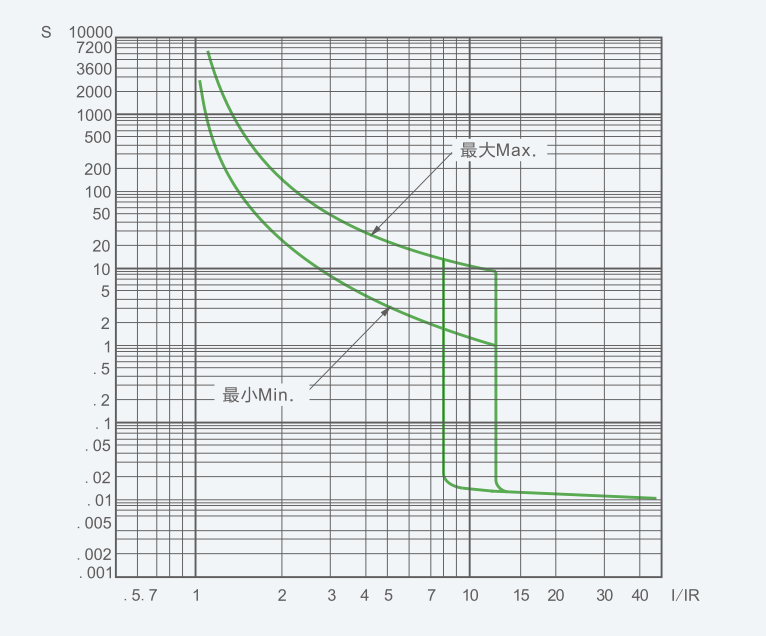
- 1.05 × In (≈ 263 A) → No trip for >1 hour
- 1.5 × In (≈ 375 A) → Trips after several minutes
- 2 × In (≈ 500 A) → 10–100 seconds
- 8–10 × In (≈ 2000–2500 A) → Instantaneous (0.02–0.05 seconds)
- That suggests the ~400 A DC surge drawn briefly by the inverter during motor start high surge (short term) events is only ~1.6 × In, well below the magnetic trip region and unlikely to nuisance-trip.
- By contrast, a fuse offers no thermal delay, it would blow on sustained surge unless upsized and matched to the Victron spec of 400A.
- Note: I’ve supplied a copy of the thermal trip curve for the ZJ Beny 250A below in case anyone would like to compare my calculations above.
What I’d like to confirm:
- Has anyone here used the Beny BDM-250 (or a similar DC breaker in the 250A range) successfully with the MultiPlus II 48/10000?
- Did you observe any nuisance trips under surge or PowerAssist peaks?
- Do you see any compliance or practical reason to not go with a therm-magnetic breaker at 250 A?
The only other circuit breaker product option is the Noark 400A breaker, which is often difficult to source. Although as discussed above, I believe the thermal trip curve of typical 250A breakers may actually be very well suited to Victron’s requirements. I also acknowledge the topic of matching 400A to the Inverter spec has been discussed here before in the forums, but I don’t believe these past posts have compared the nuances of fuses vs circuit breaker behaviours and that a lower-spec breaker may indeed be suitable.
Am I way off in my thinking here that a 250A circuit breaker will handle the surge events fine? I’d love feedback on whether others have successfully used a circuit breaker (thermal based) with the MultiPlus II 48/10000 and whether the trip characteristics look acceptable. Extra points for any photo’s of a similar system… I do love seeing what others have done 
Thanks all!
Thermal trip curve of the ZJ Beny 250A circuit breaker, source: https://www.zjbenysolar.com/zyupload/201811/22/Energy-Storage-Breaker-BDM-datasheet-201811222301132766.pdf