On our system we use the Node-RED DESS algorithm (running parallel but not controlling the scheduling itself) to decide when to turn on and off the ‘periodic full charge override (balancing)’ setting (in VRM DESS). It has a function (missing in VRM DESS) to set an additional b_goal_SOC (95%) and b_goal_hour (18:00) target for the day and then calculates when best to start charging during low prices. (is there any reason why this is not enabled in VRM DESS while it works in Node-RED DESS @dognose ? Enabling this, even if only by API call, would make a big difference I believe (but much more elegant by enabling the scheduled charge levels while running DESS). And on another note: is there a way other than polling stats every 15m to get a push message when the schedule gets changed/updated at the VRM-API endpoint?)

Without that, we would have the same problem:

And this is the result after enabling ‘periodic full charge override (balancing)’ from 12:00 (automatic On by Node-RED DESS trigger) until 14:00 (automatic Off after pricing for next day rolled in AND target SoC above 70% as was our current setting). As visible, VRM DESS is continuing to charge even with ‘periodic full charge override (balancing)’ Off because it now targets minimum SoC for the end of day tomorrow (instead of today). From here on: Rince and Repeat.

The rational for this ‘intervention’ is to enable DESS to start charging already before the ‘next day’ pricing schedule rolls in (between 13:00 and 14:00 normally. Without this intervention DESS will always miss all buying opportunities before the next day prices are available, which is a significant opportunity miss if not corrected for.
It would be nice if VRM DESS could also take in consideration b_goal_SOC and b_goal_hour for the next day, as visible in the Node-RED graphs. But that isn’t a hard requirement because come tomorrow it will simply get triggerred to enable ‘keep batteries charged’ at the optimal moment again:
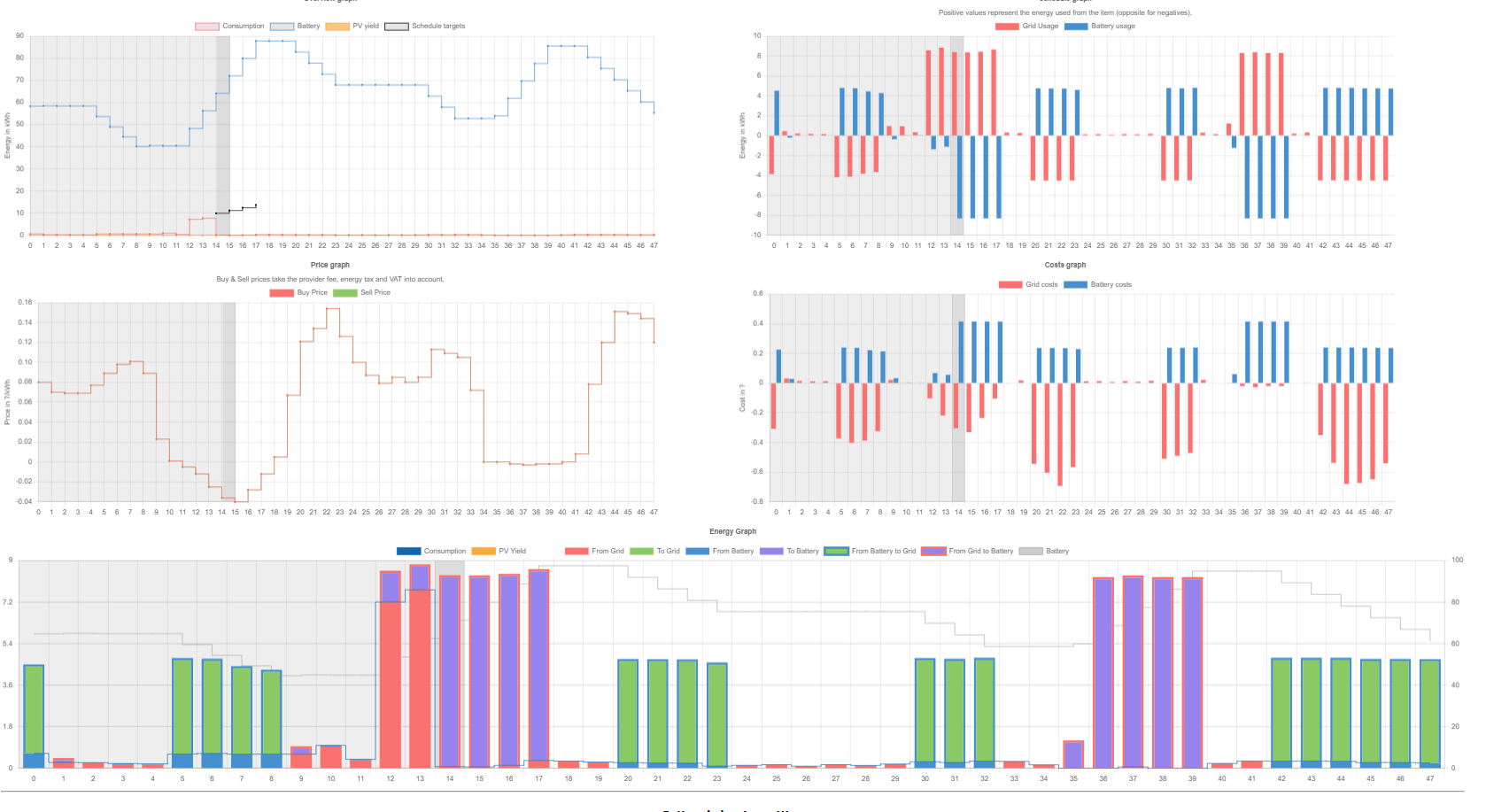
That said, the charm of this workaround is (IMHO) that it interferes minimally with the regular operation of DESS: only during those hours before the new prices roll in it may (or may not) nudge DESS to start charging a couple of hours earlier. The rest of the day it doesn’t interfere with normal DESS operation at all. I hope this will make it suitable for systems with solar involved as well, or even in combination with DESS Green (instead of Trade) but I have not tested with either yet.