STEDIN 40A max. 1 phase 230vac-50Hz incomming MAINS
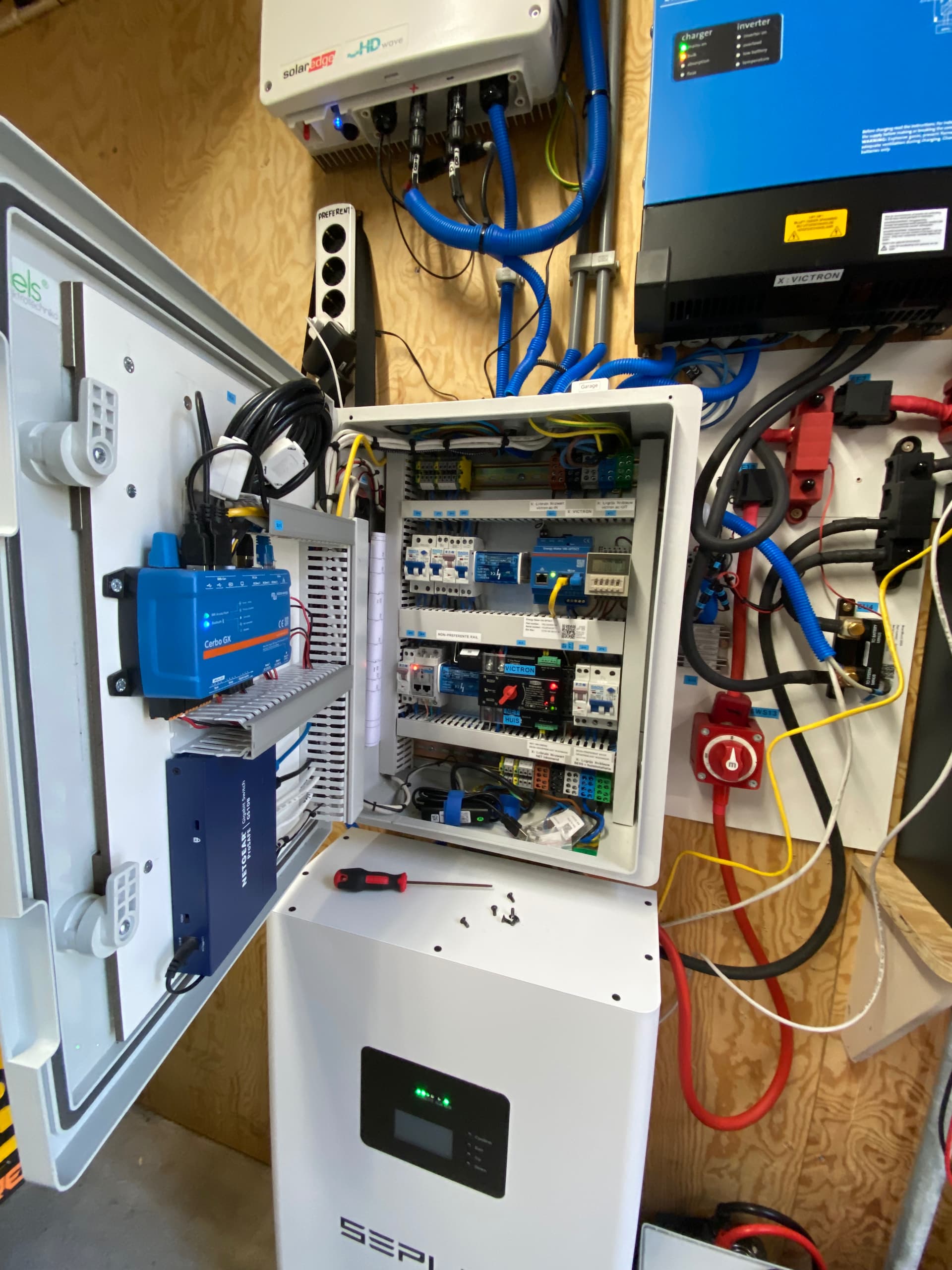
HOME installed with HAFNORM 32A / 2 rcd circuitbreakerbox
5kVA MP2-230vac Victron
Cerbo GX with 5”display
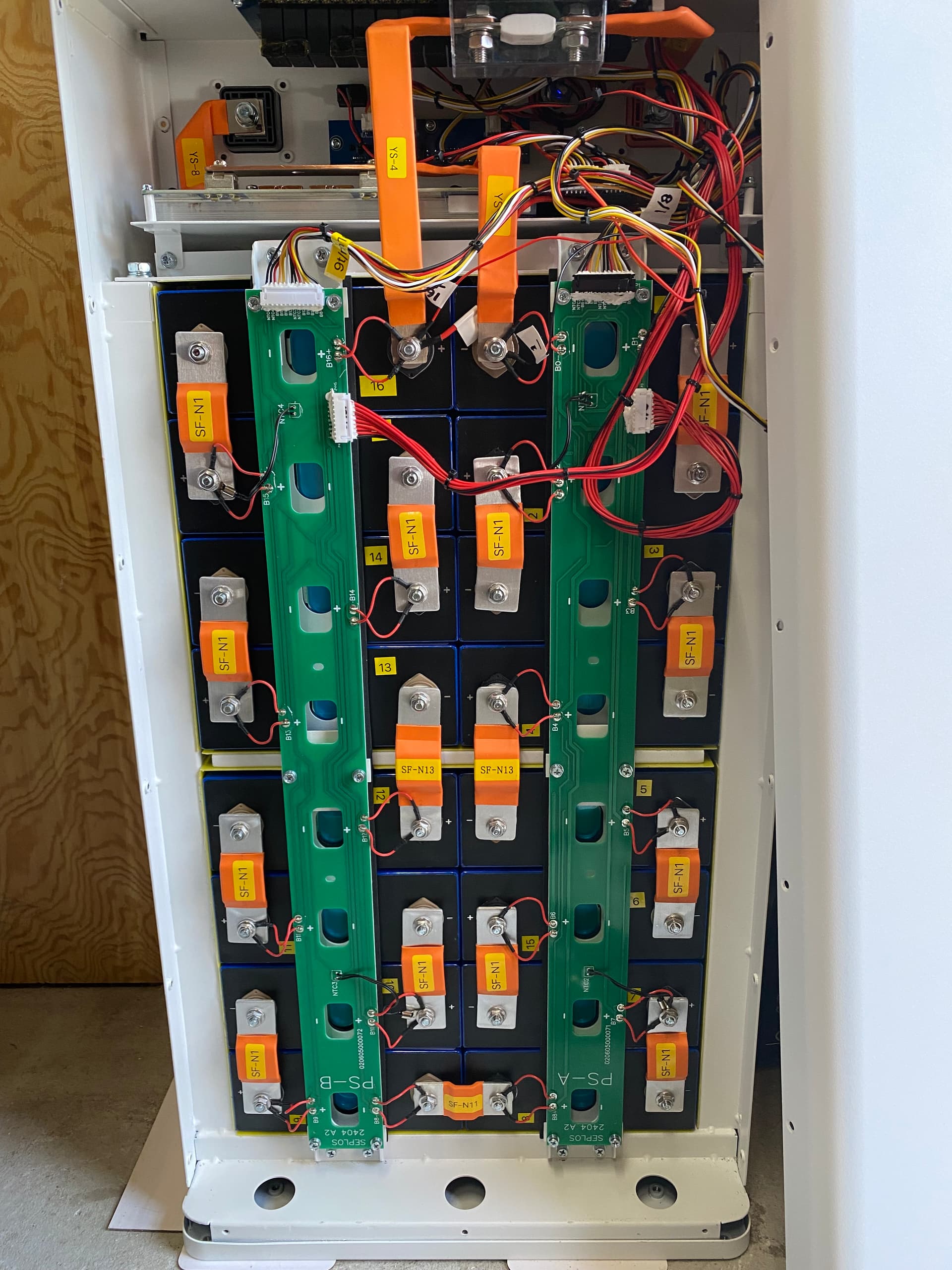
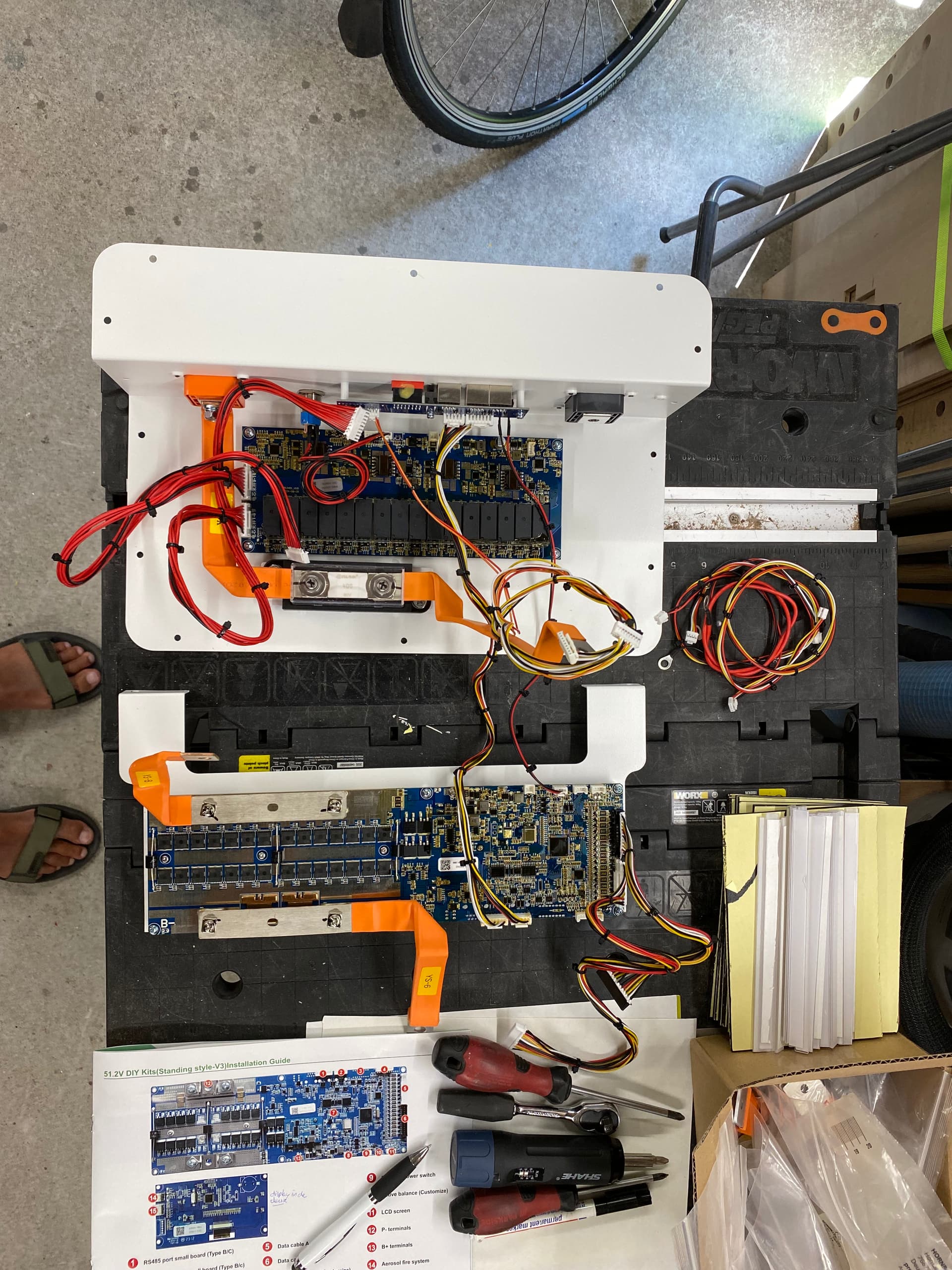
“Frankenstein-ed” Battery with;
Seplos 200A BMS V3.0/Bleutooth/display
China 16-series 51vdc/150Ah 7.6kWh LiFePO4 cells (used Chinascam-cells)
Simple fused 200 A with 300 A safetyswitch
7,6 kW-p PV system / 24 panels devided over roofing in East/South/West facing
SolarEdge 4kW HD single phase inverter with Optimisers
DIY ATS box with circuitbreakers for non preferent and preferent loads
Why did you go with SolarEdge instead of Victron? And where did you and how did you source those batteries? I have been interested in trying to build my own battery. I am confident I could do it, just curious.
Hey Sean,
The SolarEdge system i already had installed for 5 years, if i had to choose again to build from scratch, i would have chosen for DC coupled system from Victron. Unles your roofing areas are situated in shaded suroundings, than the optimiser system of SolarEdge has a better efficiency.
LiFePO4 battery system DIY you can purchase in China, i chosen for the AliExpress shop named BatteryQueen, they sell complete DIY kits with brand new and certified SEPLOS-BMS/EVA-cells products. Be aware for shops that sell cheaper cells without QR-code traceable production certificate (old electric cells from China citybusses) Always ask for a statement that cells are brand new.
Upgraded the Cerbo GX to version 3.60 and expanded the DC wiring for with the SmartShunt-300A for the additional SEPLOS unit (still awaiting to arrive) Built in 2 small coolingfans in the control cabinet, temperature control by Cerbo relais 1
For these 12vdc fans a buck-boost converter 60vdc to 12vdc is mounted and now also provides the power for the Cerbo.
Hi, i’m interrested how you connected your MP II, i have the same idea, i’ have already solarpanels installed with a sma inverer, i want to add now a battery system seplos v4 connected to a multiplus II 5000W, my house grid is a 2 phase without neutral, how did you connect and config of your vitricon setting.
Dear,
we call it here a delta grid or a tt grid , without a Neutral wire. there is no ground comming from the grid operator, i have my own ground through a grounding rod. in the street there are 3 phase present but my home is connected only to 2 of those phases. (and the next house is connected to 2 other phases), … i receive the exact voltage present between two corners of the triangle: 230V. When measuring between a phase and ground , i have 133 Vac ( our grid is a 50 hz grid in Belgium) this type of grid is old but still in use in remote area’s.
Ah! So a 2 wire system 240V - 50Hz with no reference to ground.
My system has T-NC grid incoming and is separated tot T-NS in the home installation
My Solar Edge PV is connected to the MP-II output and remains supplying power in during grid outages (daytime) and is controlled by Hz-shift 50Hz-50,2Hz so throttling down when battery is full and or low loads.
What do you exactly looking for?
I can provide a setpoint list of my BMS and the specific Victron helpers and settings for this BMS, communication cable set-up?
Nice. I see that you’ve replaced the AC ducting with what looks like Hornbach cable ducting. Which I use also. And yeah it is always a matter of time and sometimes even budget. I had everything sorted, but then the insurance told me to move it, or not to have coverage in case something bad happens. Sigh. Well. What can you do. It’s still a hobby isn’t it?
Yep, the Hornbach available Roth Lange (click: Client Challenge ) is cheaper than AC-duct and has 5 cable holders per 2 meter. Made all the side openings with a fine sawblade.
Question; Can you post some pics about your solution for the fire retarding (assurance demand? )
Ik denk dat ik mijn oude 7 kWh batterij maar af ga koppelen…
Richtlijnen voor grotere batterij systemen
Voor systemen groter dan 20 kWh de richtlijnen van de PGS-37. Dit is een hele lijst met maatregelen voor de ruimte waarin de batterijen zich bevinden. We noemen er een aantal:
Brandwerendheid 60 minuten. Dat betekent dat de ruimte waarin de batterijen staan opgesteld, afgesloten moeten zijn met een brandwerende deur die minstens 60 minuten lang brand tegenhoudt. Als de batterij zich op een hoogte van meer dan 12 meter vanaf de grond bevindt, moet die brandwerendheid 120 minuten zijn
Aangezien er bij brand giftige dampen vrij kunnen komen, moet er een ventilatiesysteem in de ruimte aanwezig zijn
Ook moet er een meting van CO (koolmonoxide) en H2(waterstof) in de ruimte plaatsvinden
Er moet een brandbeheerssysteem aanwezig zijn
Er moet een noodstopvoorziening zijn
Vluchtwegen voor personen moeten minstens 3 meter verwijderd zijn van toegang tot de EOS ruimte
Leidingen voor hemelwater, rioolwater, drinkwater mogen niet door de ruimte lopen waar het EOS is geplaatst
Er moet een noodplan zijn en een registratiesysteem met o.a. een logboek over de (jaarlijkse) inspecties
Je kunt wanden en plafonds met PROMATECT®-100 of 200 afwerken. Eigenlijk de beste oplossing omdat ze dit materiaal ook gebruiken om metalen (draag) constructies te beveiligen.
En ja de PGS 37-1verlangt het nodige van je. Niet voor niets natuurlijk. Wat ik dan doorgaans adviseer is om er twee verschillende installaties van te maken.