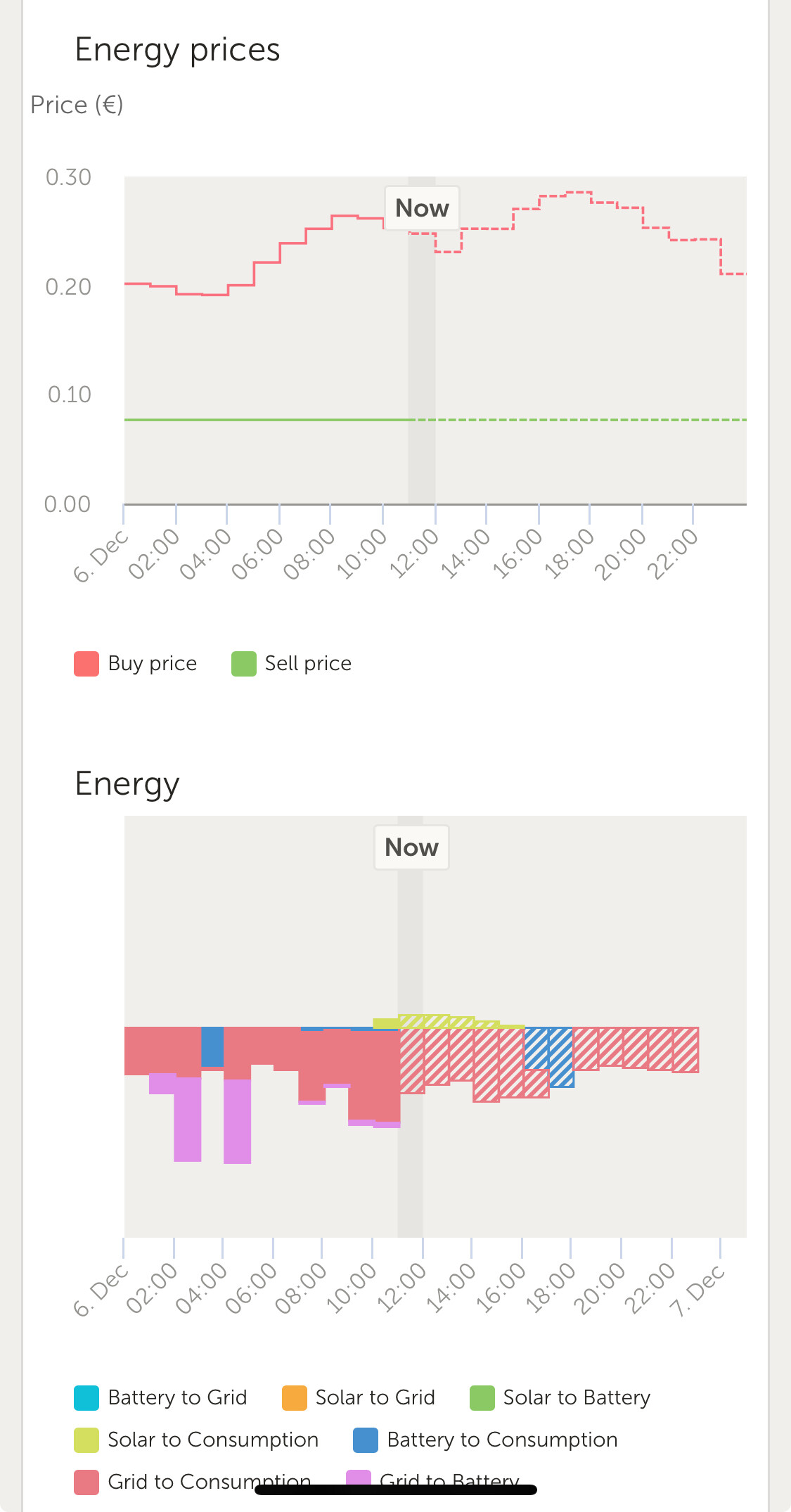
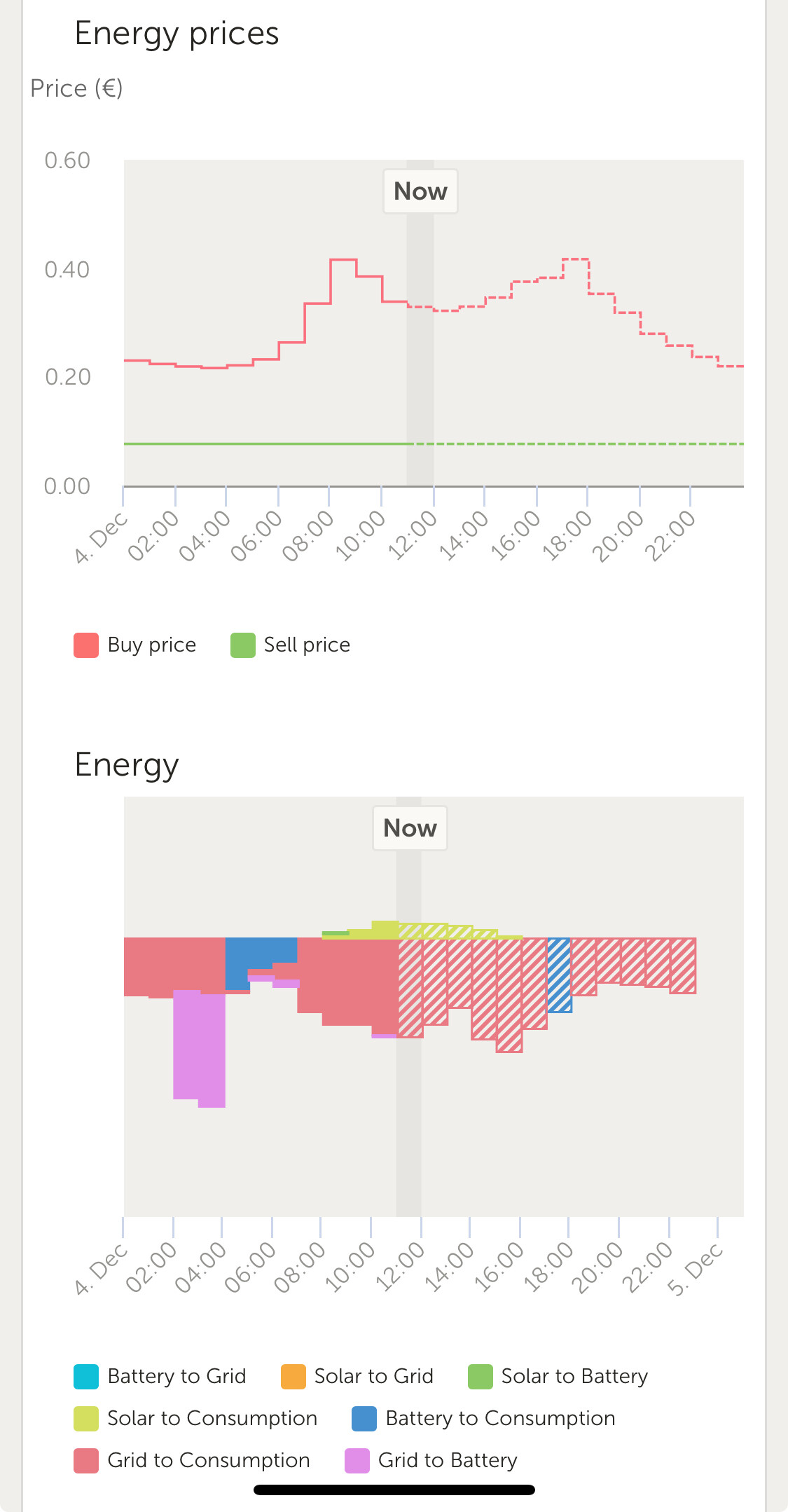
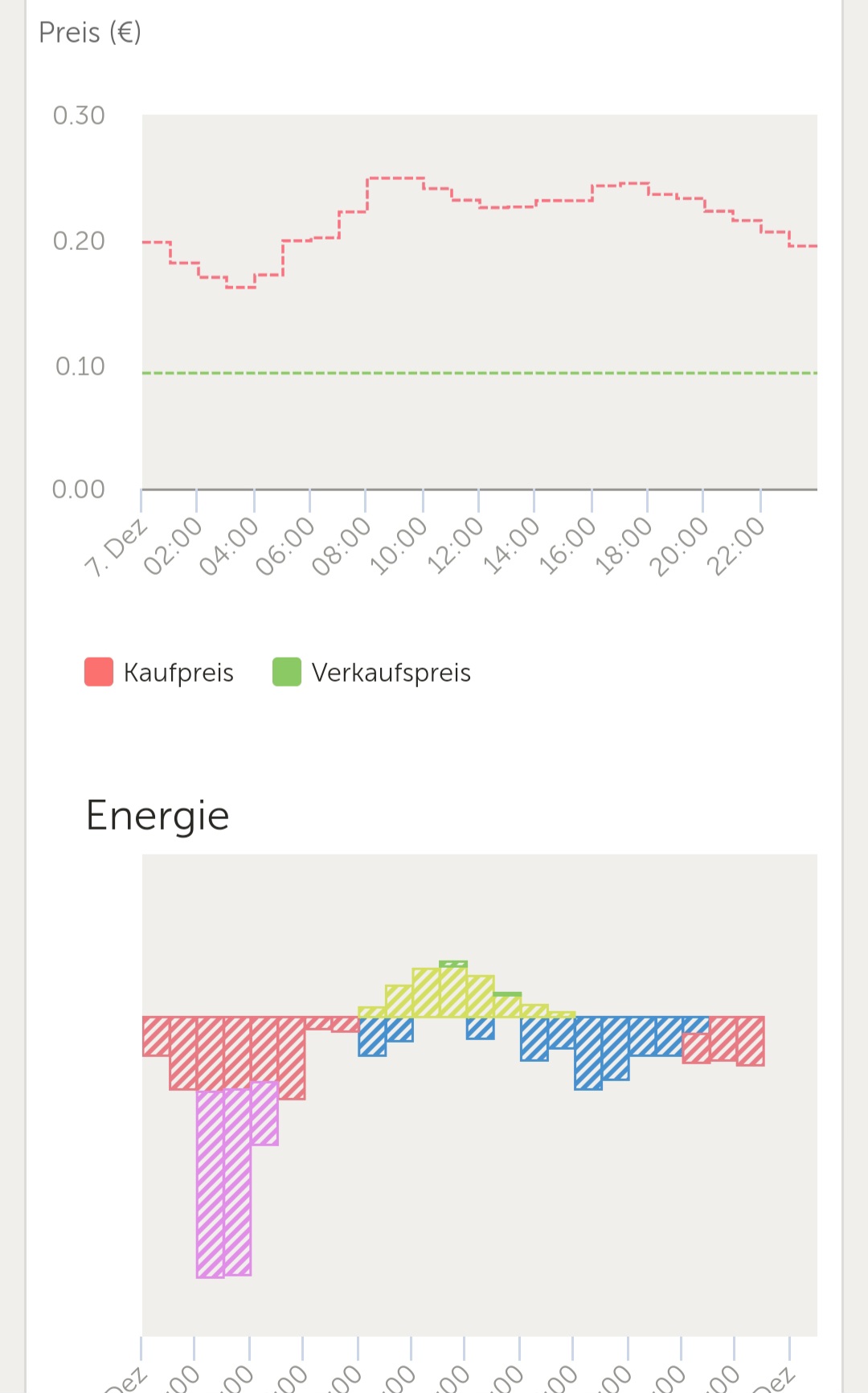
From the data it is hard to tell, what exactly happened. DESS is adapting it’s plan minimum once per hour, if it notes huge deviations during a window, it may also update the current window.
So, by just watching the initial plan and the final result - quite impossible to tell what actually happened.
The only possibilities leading to a discharge however are:
System is having a soc > target soc
System is having the idle rate bellow 100% and soc is above that rate.
System is in Self Consume mode
So, here it looks like your system either:
charged more than the target soc that was expected to reach at 4am, then the system said “Hey, we are above target soc, let’s power the loads!”
DESS lowered the target soc during that window, which implicit resulted in the same situation.
But from the amount that was discharged, it seems to have been “quite ahead” of target soc.
Eventually it may also be an issue caused by a strange soc calculation of your bms.
If Vrm decides to charge 15%, therefore the gx applies the proper charge-rates, but your soc-report is going up by 25% - it would make the system discharge 10% later on.
If you could post your portal id (numbers in the vrm url) I could lookup some more details to maybe identify the issue and see if it is “hack-related”, “system-related” or “dess-related”.
I had a similar problem and there was no communication between BMS and Victron. I am also very sure that the charging plan was generally correct, I had looked at it an hour before but the strange charging-consumption-charging behavior was still there. There is still a problem in the system somewhere.
I’ve checked both sites, both didn’t have a target soc given in the timespan where the discharge happened.
So, I’ve forwarded both examples to the VRM Team, maybe they can figure out, if there wasn’t a tatget soc send out, or if it didn’t arrive on the gx for whatever reason. (Datacenter side or other connectivity issues, maybe a 24 hour router disconnect coliding, if it happens spot on X:00?)
The Systems itself behaved correctly according to what they saw in this hour: no target soc, so enter self consume mode and sustain the loads.
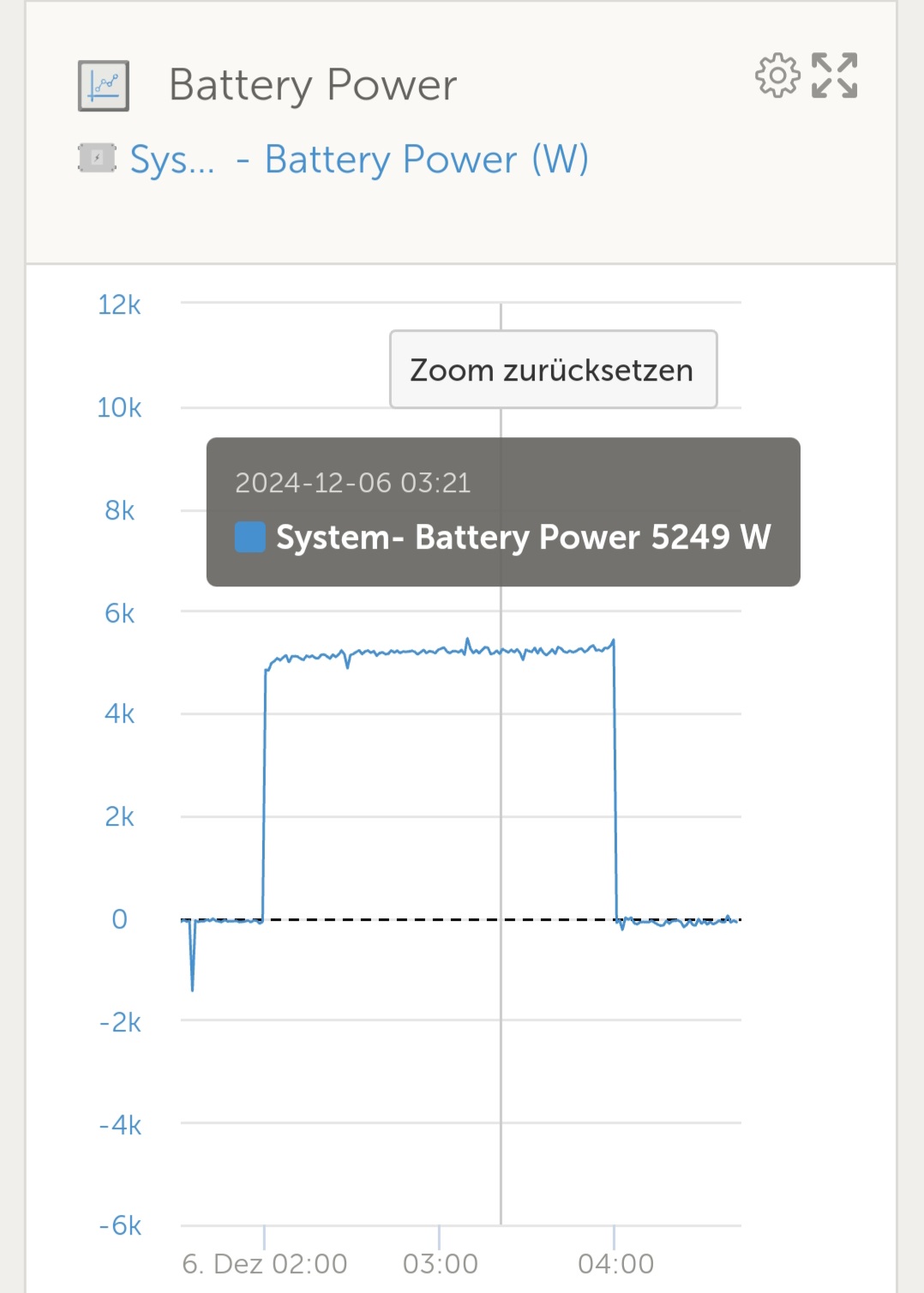
Maybe that will actually help. It hasn’t been running like this for long, but last night battery was charged continuously for 2 hours without a break, without taking anything from the battery in between.
This means that the “grid-side” 5.8 kW is parameterized as the max. charging rate in the DESS settings, whereby the battery itself is actually only charged with 5.2 kW due to the losses. Let’s keep watching…
I see it the same way. I already mentioned it above. I think I have it to some extent. There are two conflicts here. If I set the charging power too high, the DESS may start charging too late and miss good opportunities. For example, it may not manage to achieve enough charge early enough before the price goes up. If the charging power is set too low, the DESS overshoots the target and releases energy back into the grid. Can you put it like this? For me, the specific problem is that I connect the wallbox and heat pump in parallel and depending on what is needed, the DESS has a different maximum charging power. That clashes a bit. But in principle you are absolutely right. The maximum charging power plays an important role and should be calibrated fairly correctly. I have adjusted it several times with the effects mentioned above.
Too bad, an incorrect entry of the max. charge rate is definitely not the cause of the behavior. Last night the same thing again: it was supposed to charge continuously for 3 hours in the cheapest hours.
However, after 2 hours of charging, it actually discharged for an hour and then charged again for the next hour at a higher price!!!
Last night the same problem! 3 hours of continuous charging planned. In reality, however, the battery is only charged for 2 hours, but the third hour is spent discharging the battery instead of charging, even though the purchase prices are still very favorable. Then the battery is charged again at much lower prices from the grid! Isn’t that absolute nonsense?