Recently I bought a “small” steel boat. The electrical system is a total mess, but has fancy components. (the Victron Multiplus 12/1600/70-16) The seller had installed the AC-in incorrectly, and made many more poor choices. And now I’m wondering if they even picked a good location for the inverter/charger.
It’s currently placed in the engine room, under the floor. Right behind the engine. (alternator is @ the front of the engine, not connected to this multiplus in any way, only connected to the engine lead-acid battery) Engine room is dry/no water, but has a risk of some oil stuffs. Fuel type for the engine, is Diesel. Didn’t check how hot the engine room area gets.
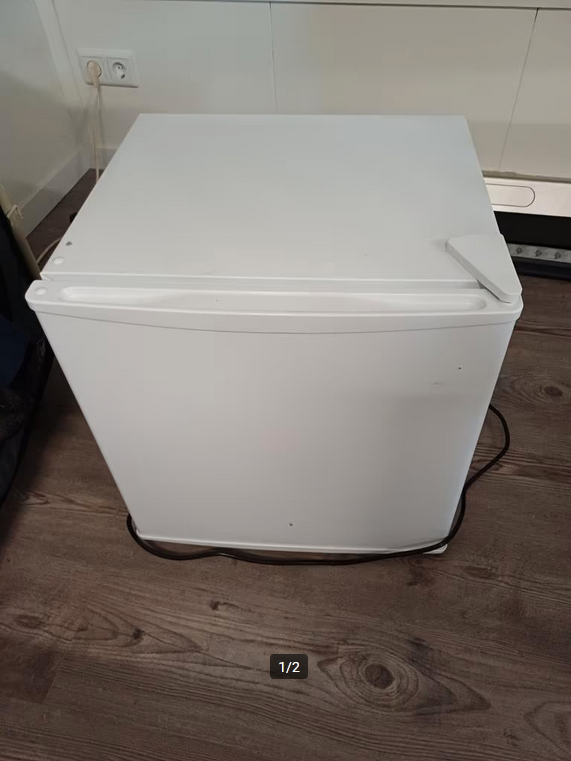
Question: is the current placement of the multiplus decent, or should I move it away from the engine room? An possible alternative location would be under the steering wheel. This would be above this floor, and when measured in a straight line, probably a bit closer to the engine’s alternator. Cable length to the battery would likely need to be extended by at least 50 cm, maybe even 1 meter. The 12v (straight from the battery) grid and 220v (from the Inverter) would need to be re-built. (I intend to use a Chineesium 500 watts 220v inverter, to power a small fridge, as a stand-alone mini grid. Just to keep as much maximum capacity on the Multiplus)
I’ve done some research, and from that research, people said about 3x for start-up current. IIRC, this mini fridge had a power demand listed on the sticker, of 129 watts. (so ~387 watts of start-up current?) The inverter I plan on using, is a random Chineesium one, but it does contain a decent amount of gravity, so I expect is does actually do 500 watts. (haven’t tried yet, and can’t easily test, because the fridge is currently walled in with building materials)
There are however probable issues with this setup, but different from what you’ve mentioned. It’s a compressor-based fridge, and it would really prefer a pure sine wave. While the sine wave this inverter outputs, is likely very blocky. That is likely going to create some noise from the compressor, and increased wear + tear. (and I’m ok with that considering what this stand-alone setup has cost me so far)
Did you confirm your “500 watt” inverter was actually 500 watt capable? And not one of those poopy ones, which could only output 200 watts constant?
It was a while ago and I was trialling 1kW inverters and didn’t find one that would reliably start an LEC 5010 under counter fridge. They would run a 1kW electric fire so were good for resistive loads.
What’s relevant here is not the nominal continuous power, but the short-term maximum power. Three times the nominal power seems a bit low to me. I would estimate at least five times. However, this depends heavily on the refrigerator compressor. Many appliances have a “soft start” function, which requires a lower starting power.
The fridge with it’s dedicated inverter, is something I’ll have to test. But this particular grid is unrelated to the main question: what about the Victron Multiplus placement?
Nobody knows the temperature in your engine room, knowbody knows how often the engine is running in your sail boat, so nobody can seriously answer your question.
See what the docs for your Multiplus say about the temperature range for which it is designed, and then you can decide by yourself.