Since receiving my Kia EV3 earlier this year, I was thrilled by the idea of creating a fully electric camping setup. For me, the essentials of traveling boil down to:
• being mobile,
• having a place to sleep, and
• something to cook with.
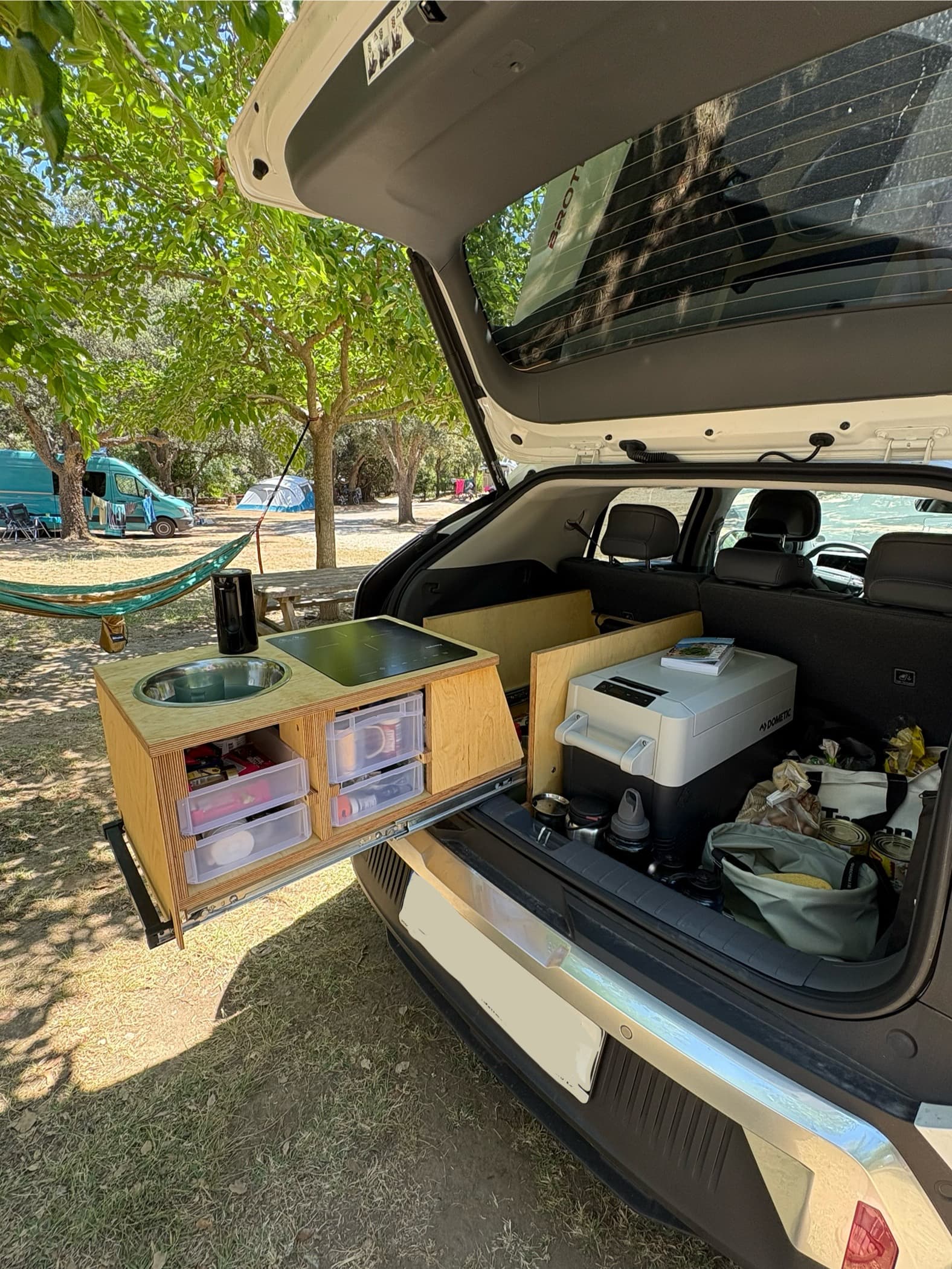
After a lot of research, I finally found what feels like the perfect rooftop tent for the car. And since the EV3 comes with its own 230V inverter, I went on to build a slide-out kitchen with an induction cooktop and a small removable sink.
Then a friend pointed me to compressor cooling boxes — something I hadn’t considered for camping. But after a few days on the road, I can say I wouldn’t want to camp without one again. I started with a cheap Chinese model but quickly upgraded to a Dometic CFF20, which has proven to be a solid choice and runs on both 230V and 12/24V.
So far, no Victron components needed, right? Almost!
Even though I’m basically driving around with an 80 kWh power bank and an onboard inverter, there was one key issue:
The car’s 230V inverter as well as its 12V outlet only work while the car is unlocked.
So — no power to the fridge while I’m out exploring 
Victron to the rescue! 
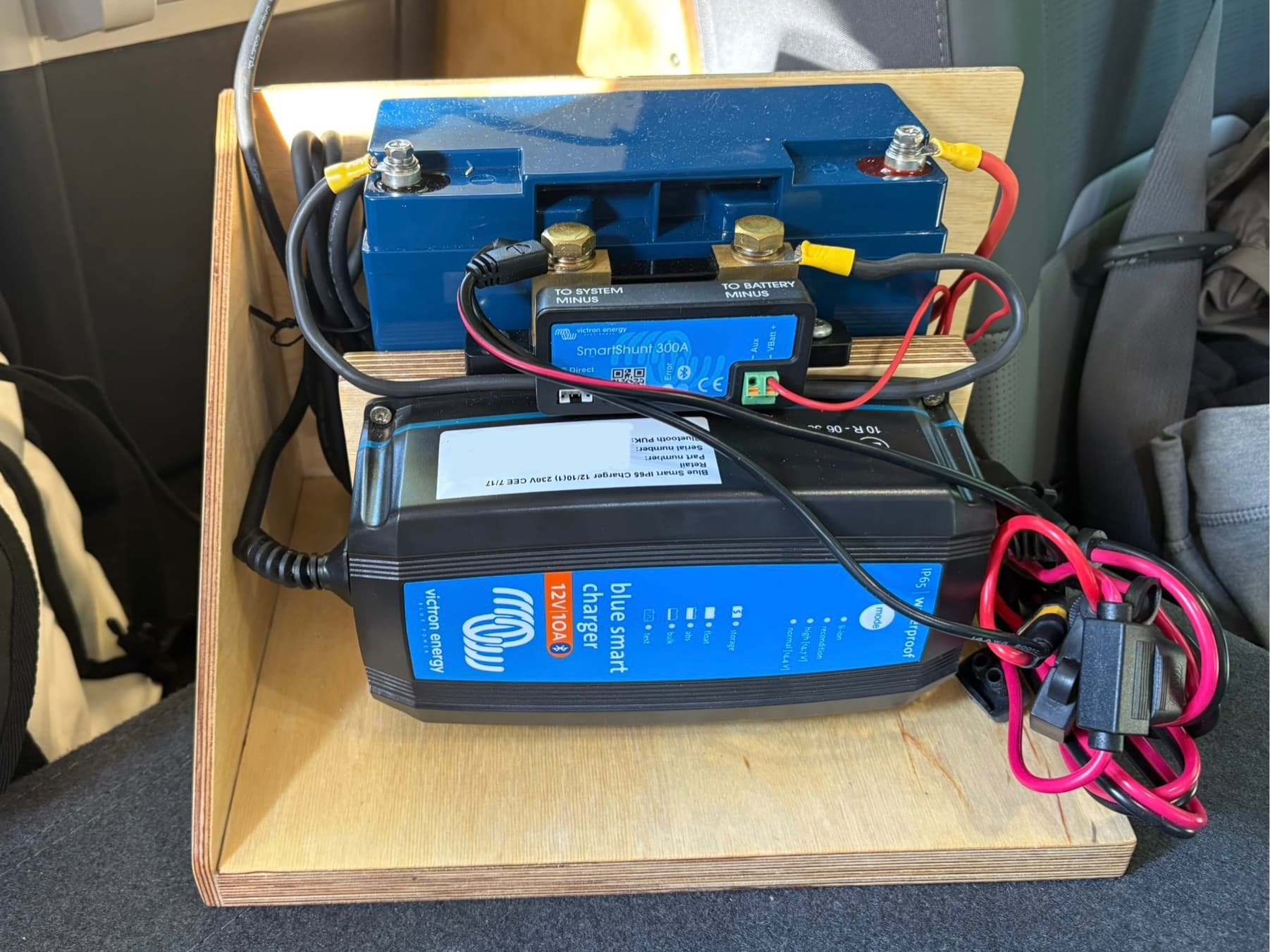
To solve this, I needed an auxiliary battery to power the fridge when the car is off. I went with a Victron SuperPack 12.8V/20Ah — the smallest available LiFePO₄ option. Its built-in BMS keeps things safe and balanced, and its ~250Wh capacity perfectly matches the Dometic’s daily consumption. Bonus: I can power the fridge directly from the battery!
To monitor the battery’s state of charge, I added a SmartShunt 300A — a cost-effective and very handy solution.
For charging, I used a Blue Smart IP65 Charger 12V/10A, since I have access to 230V while driving. It stays within the battery’s allowed charging current, is powerful enough to supply the fridge even when the compressor kicks in, and should still fully recharge the battery in 2–3 hours of driving.
The last step was some cabling and building a compact wooden rack to keep everything tidy and space-efficient by utilizing the otherwise unused space behind the fridge.
⸻
If you’ve read this far — thanks! I hope this gave you some inspiration for what’s possible with a little plannings, creativity, and Blue Power on your side